
Geography and Landscape of Algeria
Algeria, located in the heart of North Africa, boasts a diverse and striking landscape that spans vast deserts, rugged mountains, fertile plains, and a lengthy Mediterranean coastline. Its geographical features have shaped the country’s rich history, culture, and way of life. From the expansive Sahara Desert in the south to the scenic coastal regions in the north, Algeria’s varied terrain offers a unique blend of natural beauty and geological significance.
Major Mountain Ranges
Algeria, located in North Africa, features a diverse geography and varied landscape that significantly shape its natural environment. The country is characterized by expansive deserts, mountains, and coastal plains, reflecting a rich geological history. The landscape is dominated by the Sahara Desert in the south, which covers the majority of the territory, and the more fertile and mountainous regions in the north. The northern part of Algeria is marked by a rugged terrain that includes several notable mountain ranges.
The major mountain ranges in Algeria include the Tell Atlas, which runs parallel to the Mediterranean coast and is characterized by fertile valleys and high peaks. The Saharan Atlas extends into the Sahara and acts as a transition zone between the coastal mountains and the vast desert plains. The Tell Atlas peaks can reach heights above 2,000 meters, with the Djebel Chélia being the highest at approximately 2,328 meters. Additionally, the Aurès Mountains, located in northeastern Algeria, form part of the Saharan Atlas and are known for their deep gorges and rich cultural history. These mountains are essential to Algeria’s climate, agriculture, and biodiversity, serving as vital geographical features in the country’s northern landscape.
Desert Regions: Sahara
Algeria, located in North Africa, features a diverse geography with extensive desert regions, most notably the Sahara Desert. Covering a significant portion of the country, the Sahara forms one of the world’s largest hot deserts, characterized by vast stretches of sand dunes, sparse vegetation, and rocky plateaus. The landscape transitions from the coastal plain along the Mediterranean Sea to the arid, rugged terrains of the Sahara in the south. This desert region influences the climate, making it predominantly hot and dry with extreme temperature variations between day and night. Despite its harsh conditions, the Sahara is home to unique ecosystems, ancient rock formations, and archaeological sites, playing a crucial role in Algeria’s natural landscape and cultural history. The desert’s expansive horizon and distinctive topography define much of Algeria’s terrain, shaping its climate, ecology, and human activity in the region.
Coastal Plains and Mediterranean Shores
Algeria, located in North Africa, features a diverse geography characterized by expansive landscapes, including coastal plains and Mediterranean shores that shape its northern region. The country’s northern coast is renowned for its fertile plains and beautiful Mediterranean scenery, making it a vital area for agriculture, population centers, and trade.
- The Coastal Plains of Algeria extend along the Mediterranean Sea, forming a narrow strip between the sea and the mountainous interior. These plains are highly fertile and support a variety of crops, including olives, citrus fruits, and grains.
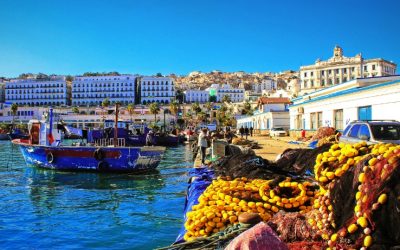
- The Mediterranean shores of Algeria are marked by sandy beaches, rocky coves, and port cities such as Algiers, Oran, and Annaba, which have historically served as hubs for commerce and cultural exchange.
- The landscape in this region is characterized by the Tell Atlas mountain range, which runs parallel to the coast, creating a natural barrier and influencing the climate of the area. The climate here is typically Mediterranean, with hot, dry summers and mild, wet winters.
- Beyond the coastal plains, the terrain rises into the Tell Atlas and further inland into the highlands, gradually leading to the more arid and rugged Sahara Desert in the south.
Natural Resources and Landforms
Algeria, located in North Africa, features a diverse geography characterized by vast deserts, mountain ranges, and fertile plains. The Sahara Desert covers more than four-fifths of the country’s territory, creating an expansive arid landscape with towering sand dunes and rocky plateaus. To the north, the Atlas Mountains stretch across the country, providing a lush contrast with their green valleys and rugged terrain. Coastal regions along the Mediterranean Sea are relatively fertile and support agriculture and dense settlements. The landscape also includes numerous rivers and oases that sustain life in the arid zones.
Algeria is rich in natural resources, especially hydrocarbons. It possesses significant reserves of oil and natural gas, making energy a key sector of the economy. Besides fossil fuels, Algeria has deposits of minerals such as iron ore, phosphates, and gold. The country’s landforms and resources have played a crucial role in shaping its economic development and regional diversity.
History and Cultural Heritage
Algeria, located in North Africa, boasts a rich history and diverse cultural heritage that reflects centuries of influences from various civilizations. From ancient temples and Roman ruins to vibrant traditions and customs, the country’s historical sites and cultural practices offer a glimpse into its complex past. Preserving this heritage is essential for understanding Algeria’s identity and its role in the broader tapestry of North African history.
Ancient Civilizations and Archaeological Sites
Algeria, located in North Africa, boasts a rich history and an impressive array of cultural heritage that reflects its diverse past. It is home to numerous ancient civilizations and archaeological sites that provide insight into its historical significance and cultural diversity. These sites not only attract scholars and tourists alike but also serve as a testament to Algeria’s complex historical narrative.
- Ancient Civilizations: Algeria was historically a crossroads for various civilizations including the Phoenicians, Romans, Byzantines, and later Arab conquerors. These cultures contributed to the development of its rich and diverse heritage.
- Roman Heritage: The city of Timgad, a UNESCO World Heritage site, is an exceptionally well-preserved Roman-era town showcasing impressive mosaics, basilicas, and arches.
- archaeological Sites: Djemila, another UNESCO site, features Roman ruins set amidst scenic mountainous landscapes, illustrating the extent of Roman civilization in North Africa.
- Prehistoric Heritage: The Tassili n’Ajjer caves contain extraordinary rock art dating back thousands of years, depicting early human life and their environment in the Sahara.
- Medieval and Arab Influence: Algiers’ Casbah, a historic medina, reflects Islamic and Ottoman architecture, representing the medieval Islamic period’s influence on Algerian culture.
Islamic Influence and Historic Cities
Algeria’s rich history and cultural heritage are deeply rooted in its diverse interactions throughout centuries, especially under Islamic influence. The arrival of Islam in the 7th century significantly shaped the region’s cultural landscape, introducing new architectural styles, knowledge, and traditions that continue to influence Algerian society today. Historic cities such as Algiers, Tlemcen, and Ghardaia serve as living museums, showcasing a blend of Islamic art, medieval forts, mosques, and traditional markets that reflect the country’s vibrant past. These cities are vital to understanding the country’s identity, preserving centuries-old customs, and celebrating its role as a crossroads of civilization in North Africa. The enduring legacy of Islamic architecture and cultural practices remains evident in the ornate mosques, intricate tile work, and cultural festivals that continue to flourish in modern Algeria.
Colonial Era and Struggle for Independence
Algeria’s history and cultural heritage are deeply rooted in its rich past, shaped by a series of historical events that have defined its identity. During the colonial era, Algeria was under French rule from 1830 until 1962, a period marked by significant resistance and hardship. The French colonization led to widespread social, economic, and cultural changes, often at the expense of local traditions and autonomy. The struggle for independence was long and arduous, involving numerous revolutionary movements, armed conflicts, and sacrifices by Algerian patriots who sought to reclaim their sovereignty. This fight culminated in the Algerian War of Independence, a brutal and transformative conflict that eventually resulted in the country’s liberation and the birth of an independent Algerian state. The legacy of this turbulent history is reflected in Algeria’s strong national identity, its preservation of cultural heritage, and its commitment to sovereignty and independence.
Modern Cultural Identity and Traditions
Algeria, located in North Africa, boasts a rich history and diverse cultural heritage that significantly shape its modern cultural identity and traditions. As a crossroads of civilizations, it has been influenced by indigenous Berber cultures, Arab-Islamic traditions, Ottoman rule, and French colonization, all contributing to its unique cultural landscape.
- Historical sites such as Roman ruins in Timgad, the ancient city of Tipasa, and the Kasbah of Algiers showcase Algeria’s deep historical roots and architectural heritage.
- Traditional music styles like Rai, with origins in Western Algeria, express social themes and modern influences, reflecting an evolving cultural identity among youth.
- Handicrafts such as intricate carpet weaving, pottery, and jewelry highlight artisanal skills passed down through generations, preserving cultural traditions.
- Religious festivals, especially Ramadan and Eid celebrations, remain integral to community life, blending Islamic practices with local customs.
- Modern Algeria continues to balance its rich historical legacy with contemporary cultural expressions, fostering a sense of pride and identity rooted in its multifaceted past.
Political and Administrative Structure
Algeria, located in North Africa, boasts a complex political and administrative structure that reflects its rich history and diverse population. The country’s governance system is a blend of republican institutions and traditional influences, designed to maintain stability and promote development. Understanding Algeria’s political and administrative framework offers insight into how the nation manages its internal affairs and engages with the wider region.
Government System and Leadership
Algeria, located in North Africa, has a political and administrative structure that reflects its history and governance systems. The country operates under a semi-presidential republic system, blending both parliamentary and presidential elements to ensure executive and legislative functions. Its leadership and government institutions play a crucial role in maintaining national stability and implementing policies.
- The President of Algeria is the head of state, elected by direct popular vote for a five-year term, with the possibility of renewal. The President holds significant powers, including appointing the Prime Minister and Cabinet, directing foreign policy, and commanding the military.
- The Prime Minister, appointed by the President, oversees the day-to-day functioning of the government and coordinates the activities of various ministries.
- The Government of Algeria is composed of various ministries responsible for different sectors such as finance, education, and health, working collectively to shape national policy.
- The Parliament is bicameral, consisting of the Council of the Nation (upper house) and the People’s National Assembly (lower house). Members are elected through a combination of direct votes and indirect appointments, representing diverse political interests.
- Administratively, Algeria is divided into 58 provinces (wilayas), each governed by a wali (governor) appointed by the central government. These provinces are further divided into districts and municipalities, facilitating local governance and administrative management.
Regions and Administrative Divisions
Algeria, situated in North Africa, has a complex political and administrative structure designed to govern its diverse population and vast territory. The country operates as a semi-presidential republic, with a President serving as the head of state and a Prime Minister as the head of government, supported by a bicameral Parliament consisting of the National Assembly and the Council of the Nation.
Administratively, Algeria is divided into 58 provinces known as “wilayas,” each governed by an elected Assembly and a Wali appointed by the central government. These wilayas are further subdivided into districts called “daïras,” which include several smaller administrative units known as “communes” or municipalities. The communes serve as the lowest level of administrative division, responsible for local governance and community services.
Regionally, Algeria can be categorized into several geographical and cultural zones, including the Sahara Desert in the south, the mountainous Kabylie region in the northeast, the coastal Tell Atlas area along the Mediterranean, and the high plains of the Algerian plateau. These regions influence local governance practices and cultural identities, contributing to the country’s rich diversity. Overall, Algeria’s political and administrative framework is designed to accommodate its extensive territory and multicultural population, ensuring regional representation and effective governance across the nation.
Key Political Developments
Algeria’s political and administrative structure is characterized by a semi-presidential republic system, where power is shared between the President and the Prime Minister. The country is divided into provinces (wilayas), each governed by a locally appointed governor (wali). The central government holds significant authority, particularly over security and economic policies, while local administrations manage regional affairs within their jurisdictions.
Key political developments in Algeria include significant events that have shaped its modern history and governance. These highlight the ongoing evolution of the country’s political landscape and the various challenges faced along the way.
- The country’s independence from France was achieved in 1962, marking the beginning of a one-party rule under the National Liberation Front (FLN).
- In the 1990s, a civil war erupted following the cancellation of elections that the opposition Islamic Salvation Front (FIS) was poised to win, leading to a period of intense political turmoil and government crackdowns.
- In 1999, Abdelaziz Bouteflika was elected President, initiating a period of political stability and constitutional reforms that aimed to promote national reconciliation.
- Throughout the 2000s and 2010s, Algeria experienced protests demanding political reform, especially during the Arab Spring in 2011, although the country’s leadership remained largely intact.
- The resignation of President Bouteflika in 2019 after mass protests marked a significant turning point, leading to the formation of a transitional government and an ongoing push for political restructuring.
- Recent years have seen efforts to enhance democratic processes, including constitutional amendments and electoral reforms, amid ongoing demands for greater transparency and civil liberties.
Economy and Natural Resources
Algeria, situated in North Africa, boasts a rich economy heavily influenced by its abundant natural resources. The nation’s vast reserves of oil and natural gas play a crucial role in shaping its economic landscape, contributing significantly to national revenue and export income. Alongside these energy resources, Algeria’s diverse natural environment offers opportunities for sustainable development and resource management, making natural resources a vital foundation for the country’s economic growth and stability.
Oil and Gas Industry
Algeria, located in North Africa, boasts a significant economy heavily reliant on its rich natural resources, particularly in the oil and gas industry. The country is one of the largest exporters of oil and natural gas in Africa, which forms the backbone of its economic stability and growth. The oil and gas sector accounts for a substantial portion of Algeria’s revenue, foreign exchange earnings, and government income, making it a crucial industry for national development.
Algeria’s natural resources have attracted considerable foreign investment and technological expertise, leading to the development of extensive extraction and production infrastructures. Despite occasional fluctuations in global oil prices, the government continues to focus on diversifying its economy while maintaining the dominance of the hydrocarbons sector. Efforts are underway to improve exploration activities, increase reserves, and modernize extraction techniques to ensure long-term sustainability and economic resilience.
The country’s natural resource wealth also offers opportunities for regional cooperation and energy exports. Algeria shares energy pipelines and agreements with neighboring countries and Europe, positioning itself as a key energy supplier in the Mediterranean and beyond. However, reliance on oil and gas exports presents challenges related to global market volatility and the need for economic diversification to reduce dependence on fluctuating commodity prices.
Agriculture and Fishing
Algeria, located in North Africa, boasts a diverse economy that relies heavily on its vast natural resources. The country is one of the world’s leading producers of oil and natural gas, which form the backbone of its economy and generate significant revenue through exports. These resources have attracted considerable foreign investment and have been central to Algeria’s economic development.
Agriculture plays a crucial role in Algeria’s rural economy, providing employment and supporting local communities. The country cultivates crops such as wheat, barley, oats, and olive oil, adapting to its semi-arid climate through efficient water management and farming techniques. Despite its potential, the agricultural sector faces challenges like land degradation and limited irrigation infrastructure, which affect productivity and food security.
Fishing is another vital industry, owing to Algeria’s extensive Mediterranean coastline. The fishing sector supplies local markets with fish and seafood, including pastas, sardines, and octopus, and contributes to the country’s export earnings. However, overfishing and environmental concerns threaten marine resources, prompting the government to implement measures for sustainable fishing practices to preserve this important natural resource for future generations.
Mining and Industry Sectors
Algeria, located in North Africa, possesses a rich economy primarily driven by its abundant natural resources, especially in the mining and industry sectors. The country benefits significantly from vast oil and gas reserves, which constitute a major portion of its export earnings and government revenue. The exploitation of these resources has positioned Algeria as one of the leading natural gas producers in the world.
- Oil and natural gas dominate Algeria’s economy, accounting for over 90% of its total exports and a large share of its GDP.
- The mining sector includes the extraction of minerals such as iron ore, phosphorus, uranium, and other industrial minerals.
- Industry sectors are also diversified with activities in manufacturing, processing, and construction, aiming to reduce dependence on hydrocarbon revenues.
- The government is making efforts to develop renewable energy sources and boost non-oil industries to ensure economic stability and growth.
Challenges and Economic Diversification
Algeria, located in North Africa, possesses a vast array of natural resources that significantly influence its economy. The country is rich in hydrocarbons, notably oil and natural gas, which constitute the backbone of its economic structure and export earnings. Despite this wealth, Algeria faces numerous challenges related to economic diversification, over-reliance on fossil fuels, and fluctuations in global commodity prices. This dependency makes the economy vulnerable to external shocks, impacting public finances and development projects.
To address these issues, Algeria aims to diversify its economy by developing sectors such as agriculture, manufacturing, and tourism. However, obstacles like bureaucratic delays, inadequate infrastructure, and political stability concerns hinder progress. Additionally, managing sustainable use of natural resources while reducing environmental impacts presents an ongoing challenge. Strengthening economic resilience demands comprehensive reforms, investment in human capital, and the promotion of innovation to ensure long-term sustainable growth in a resource-dependent nation.
Society and Demographics
Algeria, located in North Africa, boasts a diverse and dynamic society shaped by a rich history and complex demographics. The country’s population reflects a mix of Arab, Berber, and various other influences, contributing to its unique cultural landscape. Understanding the social structure and demographic trends of Algeria offers valuable insights into its development, challenges, and future prospects in the region.
Population Size and Growth
Algeria, located in North Africa, has a diverse society shaped by its rich history and cultural influences. Its population size has been steadily increasing over recent decades, driven by high birth rates and improvements in healthcare. As of 2023, Algeria’s population exceeds 45 million people, making it one of the most populous countries in Africa. The population growth rate remains positive, although it has slowed somewhat due to urbanization and demographic transitions. Major cities like Algiers, Oran, and Constantine are experiencing significant growth as people migrate from rural areas in search of better employment and educational opportunities. Overall, Algeria’s demographics reflect a youthful society with a median age in the late twenties, presenting both opportunities and challenges for economic development and social services. The population dynamics are integral to understanding the country’s development trajectory and societal structure in the context of North Africa.”
Ethnic and Linguistic Composition
Algeria, located in North Africa, exhibits a rich tapestry of society and demographics, shaped by its complex history and diverse population. The country is predominantly inhabited by Arab-Berber communities, whose cultural and linguistic heritages form the core of Algerian identity. Ethnically, most Algerians identify as Arab or Berber, with smaller communities of Tuareg, Mozabite, and sub-Saharan Africans contributing to the nation’s diversity. Linguistically, Arabic is the official language and widely spoken throughout the country, while Berber languages, such as Tamazight and Tachelhit, are recognized as national languages and hold cultural significance. French also maintains a strong presence due to historical ties, particularly in education, administration, and urban centers. The demographic landscape is characterized by a youthful population, with a significant portion under the age of 30, reflecting high birth rates and a growing urbanization trend. Overall, Algeria’s society embodies a blend of indigenous traditions and influences from its colonial past, resulting in a dynamic and multifaceted demographic profile.
Religious and Cultural Practices
Algeria, located in North Africa, boasts a diverse society shaped by its rich history, extensive cultural heritage, and various demographic influences. The population is predominantly Arab-Berber, with a significant mix of indigenous Berbers, Arabs, and other ethnic groups, contributing to a multifaceted social fabric.
The demographic landscape features a young population, with a high birth rate and a growing urbanization trend, especially in cities like Algiers, Oran, and Constantine. This urban influx has accelerated socioeconomic development and cultural exchange within the country.
Religious practices in Algeria are predominantly centered around Islam, with the majority of the population adhering to Sunni Islam, particularly the Maliki school of jurisprudence. Islam significantly influences daily life, social norms, and national identity. There are also small communities of Christians and Jews, mostly residing in urban areas and engaged in religious and cultural activities.
Culturally, Algeria is renowned for its vibrant traditions, including music, dance, cuisine, and festivals. The country preserves its Berber roots through language, art, and customs, which coexist harmoniously with Arab influences. Traditional practices such as the celebration of Ramadan, marriages, and communal gatherings highlight the importance of religion and culture in everyday life.
- Demographics: Young population, urbanization, diverse ethnic groups
- Religious Practices: Sunni Islam as the primary faith, minor Christian and Jewish communities
- Cultural Practices: Music (like Rai), traditional dances, cuisine, festivals, and preservation of Berber heritage
Urbanization and Major Cities
Algeria, located in North Africa, has a diverse and dynamic society shaped by its rich history and cultural heritage. Its population is characterized by a mix of Arab, Berber, and other influences, resulting in a unique sociocultural landscape. Over recent decades, demographic changes have been influenced by factors such as birth rates, migration, and urban development.
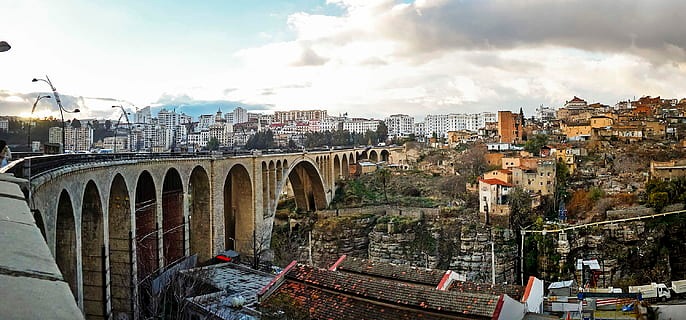
Urbanization in Algeria has progressed rapidly, with a significant portion of the population now living in cities rather than rural areas. This shift is driven by economic opportunities, improved infrastructure, and government initiatives aimed at developing urban centers. Major cities like Algiers, Oran, and Constantine serve as economic, political, and cultural hubs, attracting people from rural regions.
Algiers, the capital and largest city, exemplifies urban growth, featuring modern architecture, busy markets, and a vibrant cultural scene. It also faces challenges associated with rapid urbanization, such as housing shortages, traffic congestion, and infrastructure demands. Smaller cities continue to grow, reflecting the broader trend of urban migration that shapes Algeria’s societal and economic development in the 21st century.
Tourism and Cultural Attractions
Algeria, located in North Africa, offers a rich tapestry of tourism and cultural attractions that captivate travelers from around the world. With its diverse landscapes, historical sites, and vibrant traditions, it provides a unique experience for those seeking adventure, history, and cultural exploration. From ancient ruins to bustling markets, Algeria’s attractions showcase the country’s deep historical roots and lively contemporary culture.
Historical Sites and Museums
Algeria, located in North Africa, offers a rich tapestry of tourism and cultural attractions that draw visitors from around the world. The country boasts a diverse landscape, from the vast Sahara Desert to the lush Mediterranean coastline, providing a variety of experiences for travelers. Its historical sites and museums reveal a deep heritage influenced by ancient civilizations, Islamic culture, and colonial history.
Among its most famous historical sites is the ancient city of Timgad, a UNESCO World Heritage site known for its well-preserved Roman ruins. Another notable attraction is the city of Djemila, showcasing impressive Roman-era mosaics and architecture. In Algiers, the Kasbah, a historic medina, offers narrow winding streets, centuries-old buildings, and a vibrant local culture. The Bardo Museum in Algiers houses a remarkable collection of artifacts from Algeria’s rich past, including prehistoric relics, Roman statues, and Islamic art.
For those interested in prehistoric history, Tassili n’Ajjer National Park features extraordinary rock formations and prehistoric cave paintings that tell stories dating back thousands of years. The Sahara Desert itself is an attraction, with opportunities for adventure tourism, including camel trekking, camping under starry skies, and exploring ancient oases. These sights, combined with Algeria’s hospitable culture and flavorful cuisine, make it a captivating destination for travelers seeking both history and adventure.
Natural Landscapes and National Parks
Algeria, located in North Africa, is a destination rich in tourism and cultural attractions, as well as stunning natural landscapes and national parks. The country boasts a diverse heritage with ancient Roman ruins like Timgad and Djemila, as well as vibrant marketplaces and historic medinas that reflect its deep history. Natural landscapes in Algeria are equally remarkable, featuring the expansive Sahara Desert, the breathtaking Tassili n’Ajjer National Park with its unique rock formations and prehistoric cave art, and the lush Kabylie mountains. National parks such as Ahaggar and Tassili N’Ajjer offer travelers opportunities for hiking, wildlife viewing, and immersing themselves in untouched nature. Overall, Algeria provides a blend of historical significance and natural beauty that appeals to adventurers and culture enthusiasts alike.
Festivals and Traditional Events
Algeria, located in North Africa, boasts a rich tapestry of tourism and cultural attractions that draw visitors from around the world. Its diverse history, vibrant festivals, and traditional events offer a unique glimpse into its heritage and modern identity.
- Ancient Ruins and Historic Sites: Algeria is home to remarkable archaeological sites such as the Roman ruins of Timgad and Djemila, showcasing its Roman history. The Kasbah of Algiers, a UNESCO World Heritage site, features narrow streets and historic architecture reflecting Ottoman influence.
- Cultural Festivals: The International Magnet Festival and the Timgad International Festival celebrate music, dance, and arts, highlighting Algeria’s rich cultural diversity. Religious festivals like Eid al-Fitr and Eid al-Adha are also widely celebrated with traditional performances and gatherings.
- Traditional Events: The Sahara Desert hosts traditional camel races and festivals showcasing Berber culture. The Reggada and Chaabi music festivals provide opportunities to experience authentic Algerian folk music and dance.
Visitors can immerse themselves in the vibrant local traditions, explore historical landmarks, and enjoy lively festivals that reflect Algeria’s multifaceted cultural heritage.
Gastronomy and Local Cuisine
Algeria, located in North Africa, offers a rich tapestry of tourism and cultural attractions that reflect its diverse history and heritage. Visitors can explore ancient Roman ruins such as Timgad and Djemila, as well as the historic kasbah of Algiers, a UNESCO World Heritage site showcasing traditional architecture and narrow winding streets. The Sahara Desert’s vast dunes also provide a unique experience for adventure enthusiasts and those seeking breathtaking landscapes.
Gastronomy and local cuisine in Algeria are deeply rooted in North African traditions, with a blend of Arab, Berber, and French influences. Dishes like couscous, a staple made from steamed semolina served with meat and vegetables, highlight the country’s culinary diversity. Tagines, merguez sausages, and rich pastilla pastries further exemplify Algerian flavors. Delicious street foods such as براحة (burek) and fragrant harira soup add to the culinary charm, offering visitors a taste of authentic Algerian hospitality.
Challenges and Future Outlook
Algeria, located in North Africa, faces a range of economic, social, and environmental challenges that shape its development trajectory. As the country navigates complex issues such as resource management, political reform, and regional stability, it also looks toward the future with resilience and a desire for sustainable growth. Understanding these challenges and the potential pathways forward is essential for grasping Algeria’s role in the broader North African landscape.
Environmental Concerns and Desertification
Algeria faces significant challenges related to environmental concerns, particularly desertification, which threatens its vast arid and semi-arid regions. Rapid population growth, overgrazing, deforestation, and unsustainable water management practices have exacerbated land degradation, reducing agricultural productivity and threatening local ecosystems. Climate change is intensifying these issues by causing irregular rainfall patterns and rising temperatures, making desertification more pervasive across North Africa.
Looking ahead, Algeria’s future efforts must focus on sustainable land management, afforestation, and efficient water use to combat desertification. Investing in renewable energy and implementing policies that promote environmental conservation are crucial for mitigating ongoing environmental degradation. Additionally, regional cooperation with neighboring countries can help address shared challenges, such as water scarcity and land degradation, fostering a collective approach to sustainability.
Economic Development and Sustainability
Algeria faces several challenges in its pursuit of economic development and sustainability. Overreliance on fossil fuel exports, particularly oil and natural gas, exposes the economy to global oil price fluctuations, hindering long-term growth and diversification efforts. Additionally, infrastructural deficits, high unemployment rates, especially among youth, and political stability concerns pose significant obstacles to sustainable progress. Environmental issues such as desertification and water scarcity further complicate efforts to achieve sustainable development. Despite these challenges, Algeria’s future outlook remains cautiously optimistic as the government acknowledges the need for economic diversification, investment in renewable energy, and structural reforms to foster sustainable growth.
Looking ahead, Algeria’s economic development is likely to hinge on its ability to leverage its vast natural resources while gradually embracing technology, innovation, and renewable energy sources. Efforts to develop sectors like manufacturing, agriculture, and tourism are critical for reducing dependency on hydrocarbon revenues. Emphasizing sustainable practices and integrating environmentally friendly policies will be essential to ensure long-term resilience and social stability. International cooperation and commitment to reforming institutions will play a vital role in shaping a sustainable economic future for Algeria, fostering inclusive growth and improved quality of life for its citizens.
Regional Stability and International Relations
Algeria faces several challenges and has a complex outlook regarding regional stability and international relations. Its economic dependency on hydrocarbons, political reforms, and security concerns influence its stability and diplomatic strategies in North Africa and beyond.
- Economic Diversification: Reliance on oil and gas exports makes the economy vulnerable to global fluctuations, necessitating efforts toward diversification to ensure sustained growth.
- Political Reforms: Addressing demands for greater political openness and social justice remains a significant challenge for maintaining internal stability.
- Security Concerns: Terrorism, border security, and regional conflicts impact stability, requiring ongoing cooperation with neighboring countries and international partners.
- Regional Cooperation: Algeria plays a key role in promoting stability in North Africa, engaging in initiatives such as the Arab Maghreb Union, although political and economic differences sometimes hinder progress.
- International Relations: Maintaining balanced relations with global powers, navigating issues related to energy markets, and participating in international organizations are vital for Algeria’s strategic positioning.
- Emerging Opportunities: Improving infrastructure, investing in renewable energy, and fostering regional partnerships can bolster future stability and economic growth.
- Geopolitical Dynamics: Shifts in international alliances and regional politics present both challenges and opportunities for Algeria’s foreign policy.
- Addressing Social Challenges: Tackling unemployment, youth disenfranchisement, and social inequality is crucial for long-term stability.
- Environmental and Climate Concerns: Managing water resources and adapting to climate change are essential for sustainable development.
- Diplomatic Engagements: Strengthening diplomatic ties with regional neighbors and global powers will shape Algeria’s role in regional and international affairs in the coming years.


0 Comments