
Historical Overview of the Egyptian Language
The Egyptian language has a rich and ancient history that spans thousands of years, reflecting the complexity and evolution of one of the world’s earliest civilizations. From the earliest recorded hieroglyphic inscriptions to later developments in Coptic, the language has undergone significant transformations while preserving its cultural significance. Its study provides valuable insights into Egypt’s history, religion, and societal changes over millennia.
Origins and Early Development
The Egyptian language is one of the oldest known languages, with its roots tracing back thousands of years to ancient civilizations that thrived along the Nile River. Its origins can be generally placed around the 3rd millennium BCE, during the early stages of the Pharaonic era. The earliest form of Egyptian is known as Old Egyptian, which appears in inscriptions from the Old Kingdom period, notably in pyramid texts and royal inscriptions. This stage of the language was primarily written in hieroglyphs, a complex system of pictorial symbols representing words and sounds.
Following Old Egyptian, the language evolved into Middle Egyptian, often regarded as the classical language of ancient Egypt and the language of most literary and religious texts during the Middle and New Kingdom periods. Middle Egyptian maintained a relatively stable structure and vocabulary, serving as the linguistic foundation for subsequent stages. During the Late Egyptian period, the language experienced significant changes in grammar and vocabulary, reflecting the influence of historical events and cultural interactions. Later, Demotic and Coptic scripts emerged, representing the transition from traditional hieroglyphic writing to more simplified and alphabetic systems. Demotic was used for legal and administrative documents, while Coptic, which incorporated Greek influences, became the liturgical language of Egyptian Christianity and persisted until modern times. The evolution of the Egyptian language illustrates a rich tapestry of continuity and change, serving as a crucial window into Egypt’s ancient history and cultural identity.
Hieroglyphic Script and its Evolution
The Egyptian language has a rich and ancient history that spans thousands of years, beginning with the earliest recorded forms of communication in the predynastic period. It evolved through various stages, reflecting the complex cultural and political changes in ancient Egypt. The language’s development is closely intertwined with its writing system, particularly the hieroglyphic script, which served both religious and administrative purposes.
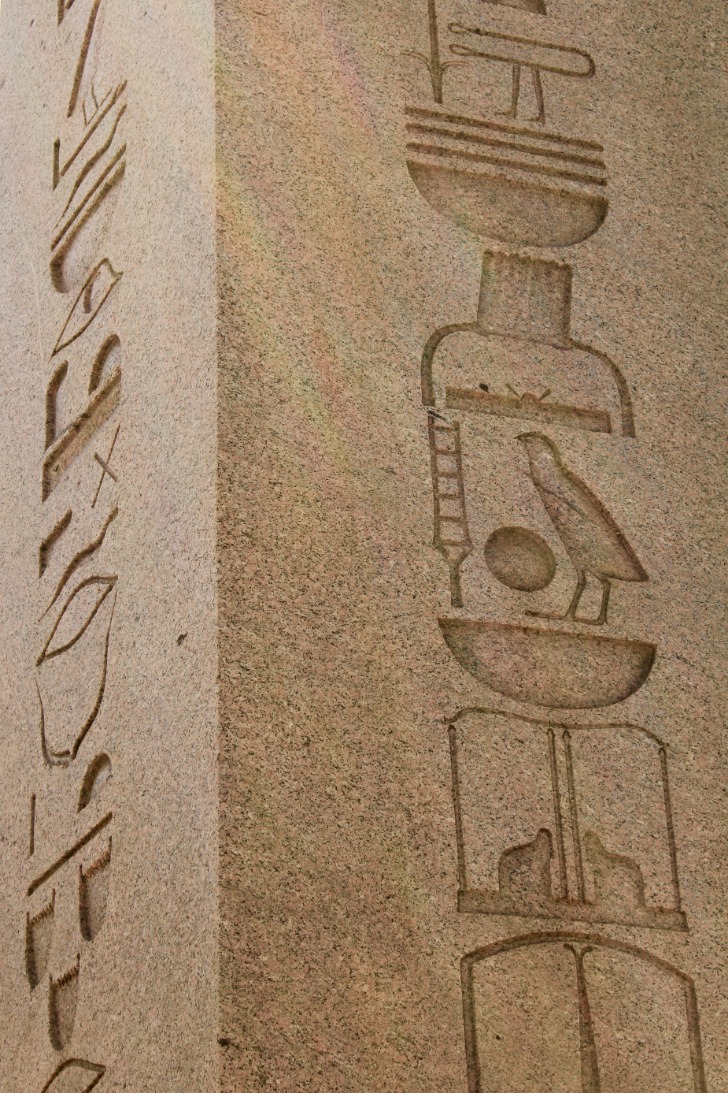
Hieroglyphics, the most renowned ancient Egyptian writing system, emerged around 3100 BCE. It consists of a combination of logographic and alphabetic elements, employing pictorial symbols to represent objects, sounds, and ideas. Hieroglyphs were primarily used in temples, tombs, and monuments to convey religious texts and royal inscriptions.
The evolution of the Egyptian language can be categorized into several phases:
- Old Egyptian (c. 2600–2000 BCE): The earliest form found in monumental inscriptions, characterized by a more formal and standardized script.
- Middle Egyptian (c. 2000–1350 BCE): Often regarded as the classical phase of the language, it was used in religious texts and literature, serving as a literary and scholarly standard.
- Late Egyptian (c. 1350–700 BCE): Featuring simplified grammar and vocabulary, it was more widely used in administrative and literary contexts.
- Demotic (c. seventh century BCE – 5th century CE): A cursive script derived from northern forms of hieratic, used primarily for everyday writing and documentary texts.
- Coptic (from the 2nd century CE onward): The latest stage of the Egyptian language, written using the Greek alphabet supplemented with some Demotic signs, and representing the language for Christian Egyptian communities.
Throughout its history, the Egyptian language demonstrated remarkable resilience and adaptability, gradually transitioning from pictorial hieroglyphs to alphabetic scripts, ultimately giving way to other languages and scripts introduced through foreign influences. Its study continues to provide valuable insights into the culture, religion, and social structure of ancient Egypt.
Demotic and Coptic Stages
The history of the Egyptian language spans several millennia and reflects the rich cultural evolution of ancient Egypt. It began with Old Egyptian, the earliest stage used during the Old Kingdom period, characterized by its hieroglyphic and cursive scripts. During the Middle Kingdom, this evolved into Middle Egyptian, which became the classical literary and religious language of Egypt.
Following the decline of traditional hieroglyphic writing, Demotic emerged around the 7th century BCE as a simplified, cursive script used mainly for administrative, legal, and commercial documents. Demotic represented a significant linguistic shift, making writing more accessible to a broader segment of the population and marking a democratization of literacy in Egypt.
Proceeding Demotic, Coptic developed as the latest stage of the Egyptian language, emerging around the 2nd century CE. Coptic employed the Greek alphabet supplemented with Egyptian signs, and it became the liturgical language of Egyptian Christianity. This stage preserves many features of earlier Egyptian but also reflects significant Greek influence, symbolizing Egypt’s diverse historical interactions. Coptic remains a crucial source for understanding ancient Egyptian language and culture, even though it is no longer spoken today.
Transition to Modern Egyptian Arabic
The history of the Egyptian language is a rich tapestry that spans thousands of years, reflecting the cultural and political evolution of Egypt. It began with the ancient Egyptian language, a branch of the Afro-Asiatic family, written in hieroglyphs during the Pharaonic era. Over time, this language evolved through several stages, including Middle Egyptian, Late Egyptian, Demotic, and Coptic, each contributing to the development of written and spoken forms.
During the Greco-Roman period, Greek and Latin influences were prominent, but Egyptian continued to be spoken by the native population in various forms. The decline of Coptic, which was the last stage of the ancient Egyptian language, corresponded with the Arab conquest of Egypt in the 7th century. This event marked a significant shift as Arabic gradually replaced Coptic as the dominant language.
The transition to modern Egyptian Arabic soenced from the 7th century onwards, initially as a segment of the colloquial dialects that developed over centuries. The Arabic language adapted to local linguistic features, giving rise to Egyptian Arabic, which became the everyday spoken language of the majority of Egyptians. Unlike Classical Arabic, used in formal contexts and religious texts, Egyptian Arabic evolved uniquely, incorporating elements from Coptic, Greek, and other languages, shaping a distinct spoken dialect that remains central to Egypt’s identity today.
Modern Egyptian Arabic is now one of the most widely spoken dialects of Arabic, heavily influenced by Egypt’s historical interactions and cultural transformations. It represents the living, evolving aspect of Egypt’s linguistic heritage, continuously shaped by social, political, and cultural changes over centuries.
Linguistic Features of Egyptian Language
The Egyptian language, with its rich history and cultural significance, showcases a unique array of linguistic features that distinguish it from other languages. From its ancient roots in hieroglyphics to its modern forms, Egyptian language reflects a complex blend of phonological, grammatical, and lexical characteristics. Understanding these features provides insight into Egypt’s historical evolution and the ways language shapes cultural identity.
Phonology and Sound System
The Egyptian language, historically rooted in Ancient Egyptian and continuing through Coptic to Modern Egyptian Arabic, exhibits a rich array of linguistic features, particularly in its phonology and sound system. These features reflect the language’s evolution from early hieroglyphic scripts to contemporary spoken dialects, demonstrating unique phonetic characteristics and sound patterns.
- Phonemes: The Egyptian language has a distinctive set of consonant and vowel sounds. Ancient Egyptian included sounds such as glottal stops and pharyngeal consonants, which are preserved in modern Egyptian Arabic. Vowels are often short and unstressed, influencing the rhythm of speech.
- Consonant System: The language features emphatic consonants (such as /sˤ/, /dˤ/, /tˤ/, /kˤ/), which are produced with pharyngealization, giving the speech a heavy, guttural quality. These emphatic sounds are typical in Arabic dialects and are a hallmark of Egyptian phonology.
- Vowel Patterns: Modern Egyptian Arabic mainly employs three short vowels /a/, /i/, /u/, along with their long counterparts. The vowel system is relatively simple, but vowel length can affect meaning and grammatical functions.
- Sound Changes: Historical sound shifts, such as the loss of certain ancient sounds or their transformation, have shaped modern pronunciation. For example, the pronunciation of classical “qaf” (ق) varies regionally, sometimes pronounced as /g/ instead of traditional /q/.
- Stress and Intonation: Egyptian Arabic emphasizes stress on specific syllables, which can influence meaning and is vital for natural speech rhythm. Intonation patterns are used to convey emotions, question forms, and emphasis.
Morphology and Word Formation

The Egyptian language, primarily represented today by Modern Standard Arabic and various Egyptian Arabic dialects, exhibits distinctive linguistic features rooted in its rich historical evolution. One notable aspect is its morphology, which involves complex word formation processes. Egyptian Arabic, as a dialect, often employs root-and-pattern patterns that are typical of Semitic languages, allowing for the creation of related words through modifications of roots. For example, roots consisting of three consonants can generate various nouns, verbs, and adjectives by applying specific morphological patterns. Word formation in Egyptian Arabic also involves affixation, where prefixes, suffixes, and infixes are added to roots to convey different grammatical nuances, such as tense, number, or gender. Additionally, the language demonstrates extensive use of reduplication for emphasis or pluralization and employs idiomatic expressions and borrowings from Coptic, Greek, and other languages through history. Overall, the morphological system of Egyptian language reflects its historical layering and its capacity for dynamic and context-specific word formation.
Syntax and Sentence Structure
The Egyptian language, historically characterized by its rich linguistic features, showcases unique syntax and sentence structures that distinguish it from other Afro-Asiatic languages. As a Semitic language, Egyptian exhibits a distinctive arrangement of words within sentences, often emphasizing subject-verb-object order, though variations are common due to colloquial influences. Classical Egyptian, including Coptic, features a complex system of verb conjugations and noun cases, which contribute to its syntactic flexibility. The language also employs specific particles and prepositions that shape sentence meaning and discourse structure. Colloquial Egyptian Arabic simplifies many of these features, favoring a more straightforward syntax with reduced inflection and a tendency to omit certain grammatical elements, thus making the language more accessible for everyday communication. Overall, Egyptian language syntax combines both historical grammatical conventions and modern adaptations, reflecting its deep cultural heritage and evolving usage patterns.
Vocabulary and Lexicon
The Egyptian language, particularly its ancient form known as Ancient Egyptian, exhibits a rich array of linguistic features characterized by a complex vocabulary and lexicon. It belongs to the Afro-Asiatic language family and has a unique system of consonantal roots that form the basis of most words. The vocabulary of Ancient Egyptian includes terms related to religion, daily life, administration, and mythology, reflecting the culture’s deep spiritual and societal structures. Over time, the language evolved through phases such as Old Egyptian, Middle Egyptian, and Coptic, each contributing to its expanding lexicon. Coptic, the latest stage of the Egyptian language, incorporates many Greek loanwords, indicating historical contact and cultural exchange. The Egyptian lexicon also features specialized terms for hieroglyphic symbols, ceremonies, and professions, highlighting the language’s functional diversity. The development of the vocabulary demonstrates how the language adapted to administrative, religious, and social needs, maintaining continuity while also demonstrating dynamic evolution over millennia.
Dialectal Variations within Egypt
Egypt is home to a rich tapestry of dialectal variations that reflect its diverse cultural and geographical landscape. These dialects, often distinct from the Modern Standard Arabic used in formal contexts, reveal the unique histories and identities of different regions within the country. Understanding the nuances of these dialects provides insight into Egypt’s linguistic diversity and how language functions as a key aspect of regional identity.
Egyptian Arabic Dialects by Region
Egyptian Arabic exhibits a rich tapestry of dialectal variations that reflect the diverse cultural and historical influences across different regions of Egypt. These regional dialects are an integral part of Egypt’s linguistic identity, showcasing unique pronunciation, vocabulary, and grammatical features.
In Cairo, the capital city, the dialect is considered the standard for Egyptian Arabic and is widely understood across the country. It serves as the base for media, television, and popular culture. The Cairene dialect is characterized by a clear pronunciation and a mix of traditional and modern vocabulary.
In the northern coastal areas, such as Alexandria, the dialect has distinct pronunciation patterns, especially in the pronunciation of the letter “g” where it often replaces the standard “j” sound. The Alexandrian dialect also incorporates some Mediterranean influences, reflected in its vocabulary and intonation.
The Upper Egyptian dialects, spoken in regions like Aswan and Luxor, are notable for their unique phonetic features and vocabulary. These dialects tend to preserve more of the classical Arabic pronunciations and often have a singsong quality, reflecting the area’s cultural heritage and history.
The Delta region, including cities like Tanta and Damanhur, has its own dialect features, characterized by particular vocabularies and a softer pronunciation style. These dialects often serve as a bridge between the northern coastal dialects and those of Upper Egypt.
In the Sinai Peninsula and the Nubian regions of southern Egypt, dialects incorporate influences from neighboring countries and indigenous languages. These variations often include unique phonetic traits and vocabulary that distinguish them from other Egyptian dialects.
Features of Cairene Arabic

Egyptian Arabic, also known as Cairene Arabic, exhibits a rich array of dialectal variations across different regions of Egypt. These variations are influenced by historical, cultural, and social factors, resulting in distinct linguistic features in urban and rural areas.
Cairene Arabic, the dialect spoken primarily in Cairo, serves as the standard and most widely recognized form of Egyptian Arabic. It is characterized by a relatively simplified pronunciation compared to rural dialects, and it often incorporates modern vocabulary and expressions due to Cairo’s status as a cultural and economic hub. Phonologically, Cairene Arabic features the use of the soft “j” sound for the letter ج (jeem), and it tends to diminish the pronunciation of the ق (qaf) sound, often replacing it with a glottal stop or a “g” sound.
Dialectal distinctions in Egypt also manifest through vocabulary, intonation, and syntax. Rural dialects, especially those in the Upper Egypt region, tend to preserve more conservative phonetic features and use vocabulary that may differ significantly from Cairene Arabic. For example, some rural communities retain the pronunciation of certain consonants and employ words that are considered archaic or region-specific.
Overall, dialectal variations within Egypt highlight the linguistic diversity of the country, with Cairene Arabic standing out as a dominant and influential dialect that continues to evolve and shape the broader landscape of Egyptian language and identity.
Rural and Bedouin Dialects
Egypt’s linguistic landscape is characterized by a rich tapestry of dialectal variations, particularly between urban and rural areas. Rural communities and Bedouin populations speak distinct dialects that often differ significantly from Standard Arabic and from each other, reflecting their unique historical and cultural backgrounds. These dialects serve as a vital part of local identity and social cohesion.
Rural Egyptian dialects tend to be more conservative, retaining many classical Arabic features and vocabulary that have evolved differently in urban centers. Bedouin dialects, spoken by nomadic tribes in the desert regions, are highly distinct, often incorporating elements from other Arabic dialects and sometimes even neighboring languages. These dialects are typically characterized by unique phonological features, lexical items, and grammatical structures that set them apart from the urban Cairene dialect, which functions as the lingua franca for the country.
Despite the dominance of Egyptian Arabic as the spoken language, these regional and Bedouin dialects play an important role in maintaining cultural heritage and local traditions. They continue to influence the way communities communicate, preserving linguistic diversity within Egypt and offering a glimpse into the country’s complex social fabric.
Modern Usage and Cultural Significance
Egyptian language, historically rooted in ancient hieroglyphs and early scripts, has evolved significantly over centuries to influence modern linguistic and cultural landscapes. Today, its modern usage reflects a dynamic blend of classical traditions and contemporary expressions, highlighting Egypt’s rich heritage. The cultural significance of the language extends beyond communication, shaping national identity and preserving centuries of history, art, and religious practices.
Language in Media and Entertainment
Egyptian language, historically known as Coptic, has played a vital role in shaping Egypt’s cultural identity and continues to influence modern media and entertainment. While Classical Arabic is the official language today, the legacy of Egyptian language persists through religious texts, traditional songs, and cultural references that are embedded in contemporary society.
In the realm of media and entertainment, the Egyptian language is often used to evoke cultural authenticity and heritage. Films, television shows, and music frequently incorporate colloquial Egyptian Arabic, making content more relatable and engaging for local audiences. This use of language also helps preserve linguistic traditions and showcases Egypt’s rich cultural history to the world.
- Egyptian Arabic is the dominant dialect in popular Egyptian movies and TV series, contributing to their widespread appeal across the Arab world.
- Musical lyrics often feature Egyptian dialect expressions, which resonate deeply with fans and reflect everyday life and emotions.
- Media campaigns and advertisements utilize Egyptian language to connect more effectively with local consumers, reinforcing cultural identity.
- Language in digital platforms, including social media, frequently employs colloquial Egyptian Arabic, facilitating informal communication and cultural exchange.
Education and Language Policy
Egyptian language, primarily represented by Arabic, holds a profound modern cultural significance as a symbol of national identity and heritage. Contemporary usage of the language extends beyond daily communication to include media, literature, and official government functions, reinforcing its role as a unifying cultural element. The widespread use of Egyptian Arabic in entertainment and social media demonstrates its importance in shaping modern cultural expression and preserving traditions amid globalization.
In educational contexts, Egyptian Arabic is typically used informally, while Modern Standard Arabic remains the language of instruction in schools and universities across Egypt. This duality reflects the country’s commitment to maintaining a connection with classical Arabic and Islamic history while fostering effective communication in everyday life. Language policies in Egypt support the preservation of classical Arabic through curriculum standards, yet they also recognize the practical necessity of Egyptian Arabic for cultural resonance and social cohesion.
Overall, the status of the Egyptian language continues to evolve, balancing the preservation of its rich historical legacy with the demands of modern communication and cultural expression. Its usage remains a vital aspect of Egypt’s national identity, influencing educational policies and shaping its cultural landscape for future generations.
Preservation and Revival Efforts
The Egyptian language has evolved significantly from its ancient roots to its modern forms, reflecting a rich history that continues to influence contemporary culture. Although ancient Egyptian hieroglyphs are no longer used in everyday communication, they serve as a crucial cultural and historical symbol. Modern Egyptian Arabic, the most widely spoken language in Egypt today, incorporates elements from its ancient past, blending traditional expressions with contemporary vocabulary. This linguistic evolution highlights the resilience and adaptability of Egypt’s language over millennia.
efforts to preserve and revive the Egyptian language involve various cultural and academic initiatives. These include scholarly studies, language revitalization programs, and the promotion of historical texts to foster a deeper understanding of Egypt’s linguistic heritage. Additionally, modern technology, such as digital archives and educational apps, plays a vital role in keeping the language accessible to new generations. These measures aim to maintain the connection between Egypt’s ancient history and its present-day cultural identity.
- Educational programs in schools and universities that focus on ancient Egyptian language and hieroglyphics.
- Restoration and conservation of monumental inscriptions and archaeological sites with ancient inscriptions.
- Development of digital tools and resources to study and teach ancient Egyptian language and script.
- Promotion of Egyptian cultural events that showcase traditional language and storytelling.
- Collaborations between international and local institutions to research and publish ancient Egyptian texts.
Comparison with Other Afro-Asiatic Languages
The Egyptian language, with its rich historical background, can be better understood through its comparison with other Afro-Asiatic languages. These languages share common roots and exhibit similar structural features, vocabulary, and grammatical patterns. By examining these similarities and differences, linguists can gain deeper insights into the evolution and unique characteristics of Egyptian within the broader Afro-Asiatic language family.
Shared Features and Divergences
Egyptian, as part of the Afro-Asiatic language family, shares numerous features with other languages within this family, such as Semitic, Berber, and Cushitic languages. Common characteristics include the use of root consonants as the basis for word formation and a system of triconsonantal roots that facilitate morphological derivation. Additionally, many Afro-Asiatic languages employ gender distinctions, complex verb systems, and a rich array of consonantal phonemes. However, Egyptian, especially in its ancient form, diverges from other Afro-Asiatic languages through its unique script system, primarily hieroglyphs, which combine logographic and alphabetic elements, unlike the predominantly consonant-based alphabets and scripts of other branches.
While Semitic languages like Arabic and Hebrew often exhibit similar morphological patterns and phonological features, Egyptian stands out with its distinctive script and phonetic developments. For instance, the Coptic language, which is the latest stage of Egyptian, incorporates Greek alphabetic characters, differentiating it from other Afro-Asiatic languages that generally maintain more conservative script traditions. Moreover, Egyptian’s grammatical structure, especially in its ancient form, shows less emphasis on case distinctions compared to some Semitic languages, reflecting divergent syntactic evolutions. Despite these differences, shared core features such as a root-based vocabulary and related phonetic inventories underscore their common ancestral origins, illustrating a complex relationship marked by both divergence and retention of ancestral traits.
Influences from Neighboring Languages
The Egyptian language, primarily represented by ancient Egyptian and its later development into Coptic, shares significant similarities and differences when compared to other Afro-Asiatic languages. As part of the Afro-Asiatic language family, Egyptian exhibits common features such as root-based morphology, a complex system of verb inflections, and a rich consonant inventory. However, its unique hieroglyphic writing system and distinct grammatical structures set it apart from its relatives like Semitic languages (Hebrew, Arabic, Aramaic) and Berber languages.
Throughout its history, the Egyptian language has been influenced by neighboring languages and cultures. In the ancient period, contact with Semitic languages through trade and conquest led to lexical loans and some shared linguistic features. During the Greco-Roman period, Koine Greek also introduced vocabulary and concepts into the Egyptian linguistic landscape. Later, in the Coptic era, Greek influence was particularly prominent, seen in religious terminology and script. Additionally, Arabic, arriving in the 7th century, profoundly impacted Egyptian, transforming its vocabulary, phonology, and script, leading to the development of the modern Egyptian Arabic dialect. These interactions reflect a long history of linguistic exchange shaped by Egypt’s strategic geographic location and historical interactions with neighboring civilizations.
Challenges and Future of the Egyptian Language
The Egyptian language, with its rich historical roots and cultural significance, faces numerous challenges in preserving and evolving in the modern world. As globalization and technological advancements influence daily life, traditional practices and linguistic heritage risk fading away. However, there is also a growing interest in revitalizing and modernizing the language, ensuring its continuity for future generations. Exploring these challenges and opportunities provides insight into the future of the Egyptian language and its role in cultural identity.
Impact of Globalization and Technology
The Egyptian language, with its rich historical roots and cultural significance, faces numerous challenges and opportunities in the contemporary world. Globalization and technological advancements have drastically influenced the preservation and evolution of Egyptian language, impacting its usage, transmission, and identity. As international communication and digital platforms facilitate the spread of dominant languages like English and Arabic, the unique features of the Egyptian language risk fading into obscurity, especially among younger generations. The dominance of global media and the internet often prioritizes mainstream languages, making it harder for local dialects and linguistic forms to thrive. However, technology also offers avenues for revitalization and preservation, enabling communities to document, share, and promote their linguistic heritage through digital archives, social media, and language learning applications. The future of the Egyptian language hinges on balancing modernization with cultural preservation, encouraging educational initiatives, and leveraging technology to maintain its vibrancy. Embracing these changes thoughtfully can ensure that the language continues to be a vital expression of Egyptian identity amidst a rapidly interconnected world.
Language Preservation Initiatives
The Egyptian language, with its rich historical background, faces numerous challenges in modern times due to globalization, linguistic assimilation, and the dominance of Arabic and other world languages. One of the primary issues is the decline of native script usage and the risk of language extinction, especially among younger generations who are more exposed to modern media and international languages. Additionally, the lack of comprehensive educational programs and resources dedicated to preserving ancient Egyptian scripts and dialects further threaten the language’s continuity.
Future prospects for the Egyptian language depend on effective preservation efforts and innovative initiatives. Advances in digital technology and online platforms offer new opportunities to document, teach, and promote the language to a global audience. Collaborative projects involving universities, cultural organizations, and government agencies can develop educational materials, revitalization programs, and cultural events that foster interest and pride in Egypt’s linguistic heritage. Ultimately, sustainable language preservation will require a multifaceted approach that combines modern technology, community engagement, and academic research to ensure that Egypt’s linguistic legacy endures for future generations.



0 Comments