
Overview of Botswana Population
Botswana, a landlocked country in Southern Africa, has a diverse and growing population. The nation is known for its stable democracy and rich cultural heritage. Understanding the demographics of Botswana provides insights into its social and economic development, as well as future prospects for the nation.
Population Size
Botswana’s population has experienced steady growth over the years, reflecting its social and economic developments. The country has an estimated population of around 2.4 million people as of recent data. This population size makes Botswana one of the less densely populated countries in Africa, with a distribution primarily centered around urban areas like Gaborone and Francistown. The population growth rate has been influenced by factors such as birth rates, mortality rates, and migration patterns. Understanding the population size is crucial for planning infrastructure, healthcare, and educational services to support the country’s development goals.
Population Density
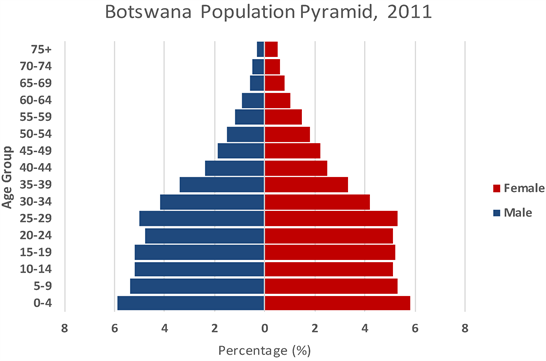
Botswana has a population of approximately 2.4 million people, making it one of the less densely populated countries in Africa. The population is concentrated mainly around the capital city Gaborone and other urban centers, with vast rural areas remaining sparsely populated. The demographic structure includes a young population, with a significant percentage under the age of 15, contributing to growth prospects and social dynamics.
Population density in Botswana is relatively low, averaging about 4 people per square kilometer. This sparse distribution is due to the country’s large expanses of desert and semi-arid land, including the Kalahari Desert, which limit habitable and arable areas. Despite its low density, Botswana’s population is steadily growing, driven by both natural increase and rural-to-urban migration, which influences national planning and resource allocation.
Population Growth Trends
Botswana has a relatively small but steadily growing population, with an estimated count of around 2.4 million people as of recent data. The population is predominantly young, with a significant proportion under the age of 15, reflecting high birth rates. Over the years, Botswana has experienced consistent population growth, driven by natural increase rather than large-scale migration. The growth trend indicates a gradual rise in population numbers, although the rate has shown signs of slowing in recent decades, aligning with global demographic shifts and urbanization patterns. Overall, Botswana’s population dynamics are shaped by factors such as fertility rates, mortality rates, and government policies aimed at improving healthcare and education. This demographic trend influences the country’s development planning and resource allocation across various sectors.
Demographic Composition
Understanding the demographic composition of Botswana provides valuable insights into the social, economic, and cultural development of the nation. It encompasses various aspects such as age groups, gender distribution, ethnic groups, and population density, offering a comprehensive view of the country’s population dynamics. Analyzing this demographic data helps in formulating effective policies and strategies to foster sustainable growth and modernization in Botswana.
Age Distribution
Burkina Faso has a diverse age distribution, reflecting a youthful population with a significant proportion of children and young adults. This demographic pattern influences the country’s social, economic, and educational policies as a large segment of the population is under the age of 25. The median age in Burkina Faso remains relatively low, indicating a country with a predominantly young demographic. Over time, this young population is expected to impact the workforce, healthcare, and future development initiatives, highlighting the importance of strategic planning to accommodate its growth and needs.
Gender Ratio
Botswana’s demographic composition features a predominantly young population, with a significant portion under the age of 15. The gender ratio in Botswana is relatively balanced, with slightly more females than males, especially in older age groups. This demographic structure influences the country’s social and economic development, highlighting the importance of targeted policies to address youth needs and gender-specific issues. Overall, understanding the gender ratio and demographic trends is essential for planning Botswana’s future growth and development strategies.
Urban vs. Rural Population
Botswana’s population exhibits a distinctive demographic composition characterized by a balance between urban and rural residents. A significant portion of the population resides in urban centers like Gaborone, the capital city, which has seen rapid growth due to rural-urban migration and economic opportunities. Despite this urban expansion, a large percentage of the population remains in rural areas, engaging primarily in agriculture and traditional livelihoods. The demographic distribution reflects a youthful population with a considerable proportion under the age of 15, highlighting ongoing demographic trends. Overall, Botswana demonstrates a blend of urban vibrancy and rural tradition, shaping its social and economic landscape.
Ethnic and Cultural Groups
Botswana is a diverse country with a rich tapestry of ethnic and cultural groups that contribute to its vibrant national identity. The population comprises various communities, each with unique traditions, languages, and customs that reflect the country’s historical and social evolution. Understanding these groups offers valuable insight into Botswana’s multicultural landscape and the harmonious coexistence of its people.
Major Ethnic Communities
Botswana is a diverse country with a rich tapestry of ethnic and cultural groups that contribute to its national identity. The majority of the population belongs to the Tswana ethnic group, which is also the dominant community in the country. Other significant ethnic communities include the Kalanga, Basarwa (San people), and Bakgalagadi, each with unique languages, traditions, and customs. These groups coexist peacefully, maintaining their cultural heritage while embracing the common national identity. Botswana’s cultural landscape is further enriched by various festivals, traditional music, dance, and crafts that highlight the country’s diverse ethnic makeup. The blend of these cultural influences fosters a sense of unity and pride among Botswana’s citizens and contributes to the nation’s vibrant, multicultural society.
Languages Spoken
Botswana has a diverse population composed of various ethnic and cultural groups. The majority of the population belongs to the Tswana ethnic group, which is also the dominant cultural group in the country. Aside from the Tswana, there are several other ethnic communities including the Kalanga, San, Bakgatla, and Basarwa, each contributing to the rich cultural tapestry of Botswana. These groups maintain unique traditions, languages, and customs that are integral to Botswana’s national identity.
Languages spoken in Botswana primarily include English and Setswana, the national language. English is used officially in government, education, and business sectors, making communication across different groups straightforward. Setswana is widely spoken as the lingua franca and is part of the country’s cultural heritage. Additionally, various other languages such as Kalanga, Sekgalagadi, and San languages are spoken by smaller communities throughout the country, reflecting Botswana’s ethnolinguistic diversity.
Cultural Diversity and Practices
Botswana’s population is characterized by a rich tapestry of ethnic and cultural groups that contribute to the nation’s diverse cultural landscape. The majority ethnic group is the Tswana, who play a significant role in shaping the country’s traditions, language, and social practices. Aside from the Tswana, there are other ethnic groups such as the Kalanga, Bakalanga, Basarwa (San people), and the Bakgai, each bringing unique cultural practices, languages, and customs to the national identity. Botswana’s cultural diversity is reflected in its vibrant music, dance, traditional ceremonies, and art forms, which vary across different communities. Traditional practices like initiation rituals, storytelling, and community celebrations remain integral to preserving cultural heritage. The country actively promotes the appreciation and preservation of its diverse cultural practices, fostering social cohesion and national pride among its varied ethnic groups.
Population Distribution and Regions
Population distribution and regional organization are important aspects of understanding a country’s demographic landscape. In Botswana, the way people are spread across different regions influences economic activities, social services, and development planning. Analyzing these patterns helps provide insights into regional disparities and growth trends, ensuring that resources are allocated efficiently and equitably.
Population Centers
Population distribution and regions in Botswana are shaped by geographic, economic, and historical factors. The country features a diverse landscape that influences where people settle, with higher population densities near water sources and urban centers. The majority of Botswana’s population is concentrated in the eastern parts of the country, particularly around the capital city, Gaborone, and other major towns such as Francistown and Maun. These population centers serve as economic and administrative hubs, attracting people from rural areas seeking employment and education opportunities.
Regions like the Central District and the Southern District also host significant populations due to their accessibility and infrastructure. The arid Kalahari Desert in the west and northwest has a sparse population due to its harsh environment, while more hospitable areas tend to have higher population densities. Understanding the population distribution in Botswana helps in planning regarding resource allocation, infrastructure development, and regional services to meet the needs of various communities effectively.
Regional Variations in Population Density
Population distribution in Botswana is uneven, with most people living in specific regions due to factors such as climate, resources, and economic opportunities. Urban areas like Gaborone, the capital, and Francistown experience high population densities, serving as economic and administrative hubs, whereas vast rural areas have sparse populations. Regional variations significantly influence settlement patterns, with the eastern parts of the country being more densely populated compared to the arid Kalahari Desert to the northwest. These differences are shaped by the availability of water, arable land, and infrastructure, which attract people to certain regions over others. Understanding these regional variations helps in planning resource allocation, infrastructure development, and social services to better serve Botswana’s diverse population across its regions.
Migration Patterns
Botswana’s population distribution is primarily concentrated in urban areas such as Gaborone, Francistown, and Maun, where economic opportunities and infrastructure are more developed. The majority of the population resides in the southeastern part of the country, which has a more temperate climate and access to transportation networks. Rural regions tend to have lower population densities, with many communities engaged in subsistence farming and pastoralism.
Migration patterns in Botswana have been influenced by economic factors, with many individuals moving from rural areas to urban centers in search of employment, education, and better living standards. Historically, migration was also driven by the movement of traditional communities and cattle herders, but recent trends show increased movement towards cities and towns. Additionally, some migration occurs due to cross-border movement with neighboring countries, contributing to a more diverse demographic landscape in urban regions.
Socioeconomic Factors
Socioeconomic factors play a crucial role in shaping the population dynamics and development of Botswana. These factors include income levels, education, employment opportunities, and access to healthcare, all of which influence the quality of life and growth patterns within the country. Understanding these elements is essential for addressing challenges and fostering sustainable progress in Botswana’s diverse communities.
Literacy and Education Levels
Socioeconomic factors, literacy, and education levels play a significant role in shaping the population dynamics of Botswana. Higher income levels and improved access to education contribute to better health outcomes, increased employment opportunities, and overall societal development. Literacy rates directly influence economic growth by empowering individuals with the skills needed for diverse job markets and fostering informed decision-making. In Botswana, ongoing efforts to enhance educational infrastructure and reduce disparities have led to gradual improvements in literacy and education, which are vital for the country’s sustainable development. Addressing socioeconomic disparities remains essential to ensure equitable growth and uplift marginalized communities within the population.
Employment and Workforce Composition
Socioeconomic factors, employment, and workforce composition play a crucial role in shaping the population dynamics of Botswana. The country’s economic development, largely driven by diamond mining, has influenced employment opportunities and income levels, affecting overall living standards. A significant portion of the population is engaged in the agricultural sector, although urban areas are experiencing a shift towards service industries and manufacturing. Education and skill levels vary across regions, impacting workforce productivity and economic growth. Efforts to diversify the economy aim to create more diverse employment opportunities, which are essential for reducing unemployment rates and addressing income inequality. Understanding these factors helps to assess the social and economic well-being of Botswana’s population and guides policy development for sustainable growth.
Healthcare Access and Population Health
Socioeconomic factors significantly influence the health outcomes of Botswana’s population. Wealth disparities, education levels, and employment opportunities impact individuals’ ability to access necessary healthcare services and maintain healthy lifestyles. Lower socioeconomic status is often associated with higher rates of poverty-related health issues, inadequate nutrition, and limited healthcare access.
Healthcare access in Botswana varies across regions, with urban areas generally having better facilities and services compared to rural communities. Challenges such as shortages of healthcare professionals, limited infrastructure, and insufficient medical supplies hinder the delivery of quality care. Efforts to improve healthcare infrastructure and workforce distribution are crucial to achieving equitable health outcomes for all population groups.
Population health in Botswana is shaped by the interplay of socioeconomic status and healthcare accessibility. The country faces health challenges including high HIV/AIDS prevalence, tuberculosis, and non-communicable diseases. Addressing social determinants of health through improved education, income opportunities, and healthcare services is essential for enhancing overall health and reducing health disparities among its population.
Future Population Projections
Future population projections provide valuable insights into the expected growth and demographic changes in a country. In the context of Botswana, these projections help policymakers, researchers, and citizens understand potential trends in population size, age distribution, and urbanization. Analyzing these patterns is essential for planning resources, infrastructure, and social services to ensure sustainable development and improved quality of life for future generations.
Predicted Growth Trends
Future population projections for Botswana indicate a steady increase driven by factors such as improving healthcare and relatively high birth rates. Demographers predict that the country’s population will continue to grow over the coming decades, potentially reaching over 3 million by 2050. This growth trend is expected to be gradual, with urban areas experiencing more rapid expansion due to rural-to-urban migration. Additionally, advancements in medical infrastructure are likely to contribute to a decline in mortality rates, further supporting population growth. Nonetheless, policymakers need to consider the implications of an increasing population on resources, infrastructure, and social services to ensure sustainable development in Botswana.
Challenges and Opportunities
Future population projections for Botswana indicate continued growth, driven by a combination of natural increase and improved healthcare. As the population expands, it presents both opportunities and challenges for the country’s development. One significant challenge is ensuring sustainable resource management, including water, land, and energy, to support the growing population without causing environmental degradation. Additionally, rapid population growth can strain healthcare, education, and social services, requiring strategic planning and investment to meet rising demands.
On the other hand, the increasing population offers opportunities for economic development, particularly through an expanding workforce and consumer base. Botswana can leverage its youthful demographic to foster innovation and entrepreneurship, stimulate the economy, and attract investment. Moreover, urbanization and population growth can boost industries such as construction, transportation, and commerce, contributing to national development goals. Adequate policies and investments are essential to maximize benefits while mitigating potential negative impacts of population increase.



0 Comments