
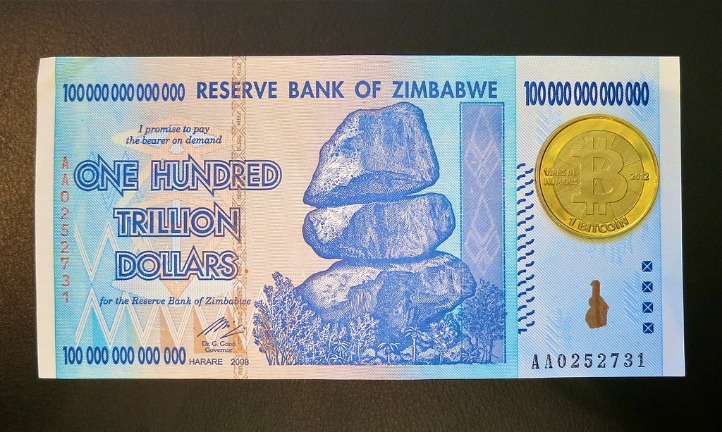
Overview of Zimbabwean Currency and Inflation
Zimbabwean currency has experienced significant fluctuations over the years, largely influenced by hyperinflation and economic instability. The country’s monetary history is marked by periods of rapid depreciation and the issuance of increasingly larger denominations. Understanding the value of extreme denominations like 100 trillion Zimbabwe dollars requires examining the country’s inflationary trends and current exchange rates. This article explores how much 100 trillion Zimbabwe dollars is worth in USD, providing insight into the impact of inflation on currency value.
Historical Context of Zimbabwean Dollar
The Zimbabwean currency has experienced significant volatility and hyperinflation over the past few decades, making its historical context crucial to understanding its current value. The Zimbabwean dollar, once a stable currency, faced severe devaluation due to economic and political challenges, leading to multiple redenominations. During periods of hyperinflation, the country issued increasingly large denominations, with the highest being the 100 trillion Zimbabwean dollar note in 2008, which reflected the rapid loss of currency value. Today, due to the economic collapse, the Zimbabwean dollar is no longer widely used, replaced by foreign currencies like the US dollar and South African rand. When considering how much 100 trillion Zimbabwean dollars is in USD today, it’s important to understand that hyperinflation rendered such denominations virtually worthless in practical terms, with the official exchange rates often being highly unreflective of real-world value. As of recent data, 100 trillion Zimbabwean dollars would have a negligible equivalent in USD, often just a few cents or less, highlighting the extraordinary inflation that the currency endured.
Hyperinflation and Its Impact on Currency Value
The Zimbabwean currency has experienced significant fluctuations over the years, primarily due to periods of hyperinflation that drastically diminished its value. Hyperinflation in Zimbabwe reached unprecedented levels, with inflation rates soaring into the billions and trillions of percent, rendering the local currency almost worthless. As a result, Zimbabwe adopted multiple foreign currencies, such as the US dollar and South African rand, to stabilize the economy and facilitate transactions. The hyperinflation era left a lasting impact on the value of Zimbabwean currency, making large denominations like 100 trillion Zimbabwean dollars commonplace but virtually meaningless in real terms. Currently, due to the diminished value of the Zimbabwean dollar, conversions like 100 trillion Zimbabwean dollars translate to only a few USD, emphasizing the extent of the currency’s devaluation caused by hyperinflation and economic instability.
Understanding the Exchange Rate Dynamics
Understanding exchange rate dynamics is essential for appreciating how currencies fluctuate and influence international financial transactions. Factors such as economic stability, inflation rates, and government policies play a crucial role in shaping these movements. This article aims to explore how much 100 trillion Zimbabwe dollars is in USD, highlighting the significant differences in value caused by historical hyperinflation and currency devaluation.
Official Exchange Rates vs. Black Market Rates
Understanding the exchange rate dynamics between official exchange rates and black market rates is crucial for accurately assessing the value of currencies like the Zimbabwe dollar. Official rates are set by the government or central bank, often reflecting the intended or controlled value, but they may not represent the actual market conditions. In contrast, black market rates emerge due to currency shortages, economic instability, or government restrictions, and they tend to fluctuate based on supply and demand outside official channels. As a result, the black market rate often provides a more realistic picture of the currency’s true worth in practice.
Regarding the conversion of 100 trillion Zimbabwe dollars into USD, the value depends heavily on the prevailing exchange rate, which can vary significantly between official and black market rates. At the official rate, the amount may seem deceptively high or low, but when converted at the black market rate—often significantly weaker—the actual USD equivalent might be much smaller. Given Zimbabwe’s hyperinflation history, precise calculations require current market data, as the value of the Zimbabwe dollar has drastically depreciated, making such large nominal figures less meaningful without context.
Factors Influencing the USD/Zimbabwe Dollar Rate
The USD/Zimbabwe Dollar exchange rate is influenced by a complex interplay of economic, political, and external factors, making it a dynamic and often volatile measure. Understanding these factors helps in assessing how much 100 trillion Zimbabwe dollars is worth in USD. Given Zimbabwe’s history of hyperinflation, the exchange rate can fluctuate dramatically based on inflation rates, monetary policies, and confidence in the economy.
- Inflation Rates: Hyperinflation in Zimbabwe has drastically reduced the value of the local currency, causing the exchange rate to skyrocket compared to the USD.
- Government Policies: Monetary policies, including printing new money and controlling interest rates, directly impact the USD/Zimbabwe Dollar rate.
- Economic Stability: Political stability and economic performance influence investor confidence and, consequently, the exchange rate.
- External Factors: Global commodity prices, foreign investment flows, and international sanctions can affect Zimbabwe’s currency valuation.
- Market Demand and Supply: The availability of USD and demand for Zimbabwe Dollars determine short-term fluctuations in the exchange rate.
As of recent data, due to hyperinflation, the Zimbabwean dollar has become virtually worthless in terms of USD. For example, during times of hyperinflation, a trillion Zimbabwe dollars might equate to only a few cents USD, and 100 trillion Zimbabwe dollars could be valued similarly, depending on the prevailing exchange rate at that moment.
Therefore, understanding the current exchange rate is essential for accurate conversion. In hyperinflationary contexts, the official exchange rate might differ significantly from parallel markets, and the actual USD value of 100 trillion Zimbabwe dollars could be extremely low, sometimes amounting to just a few dollars or less.
Recent Trends in the Exchange Rate
Understanding exchange rate dynamics involves analyzing how various economic factors influence the value of one currency relative to another. Recent trends often reflect market expectations, inflation rates, monetary policies, and geopolitical events. Exchange rates can fluctuate significantly over short periods due to these underlying factors, impacting international trade and investments.
Calculating the USD Equivalent of 100 Trillion Zimbabwe Dollars
Understanding the value of 100 trillion Zimbabwe dollars in USD involves examining the country’s hyperinflation-driven currency and its impact on the exchange rate. As Zimbabwe experienced extreme inflation, traditional currency values became unreliable, making it essential to analyze current market rates to determine the USD equivalent. This article explores the process of converting such a colossal amount of Zimbabwean dollars into US dollars and provides insights into its real-world worth.
Determining the Current Exchange Rate per Zimbabwe Dollar
The value of 100 trillion Zimbabwe dollars in USD depends on the current exchange rate between the Zimbabwean dollar and the US dollar. Due to Zimbabwe’s history of hyperinflation and currency revaluations, the official and unofficial exchange rates can vary significantly. To determine the USD equivalent, first, find the latest exchange rate for one Zimbabwe dollar. Then, multiply 100 trillion by this rate to get the amount in USD.
For example, if the current exchange rate is 1 Zimbabwe dollar = 0.00001 USD, then 100 trillion Zimbabwe dollars would be:
100,000,000,000,000 x 0.00001 = 1,000,000,000 USD
This calculation illustrates the importance of checking real-time exchange rates, as they fluctuate frequently. Always refer to a reliable financial news source or currency exchange platform for the most accurate and up-to-date rates before performing such conversions.
Sample Calculation Method
Calculating the USD equivalent of 100 trillion Zimbabwe dollars involves understanding the current exchange rate between Zimbabwe dollars (ZWD) and US dollars (USD). Since Zimbabwe recently adopted a new currency system following hyperinflation, the official exchange rate can fluctuate significantly. To estimate the value, you need to obtain the latest exchange rate and then perform a simple conversion. Here’s a sample calculation method to determine how much 100 trillion ZWD is worth in USD.
- Find the current exchange rate: Obtain the latest USD to ZWD rate from a reliable financial source or currency converter. For example, suppose 1 USD equals 50 billion ZWD.
- Convert the amount in Zimbabwe dollars to USD: Divide the amount in ZWD by the exchange rate. Using the example rate:
USD equivalent = 100,000,000,000,000 ZWD ÷ 50,000,000,000 ZWD/USD = 2,000 USD.
- Interpret the result: The calculation indicates that 100 trillion Zimbabwe dollars is approximately 2,000 USD at this exchange rate.

This method can be applied with any current exchange rate to determine the USD value of any amount in Zimbabwe dollars. Keep in mind that exchange rates can vary daily, so for precise calculations, always refer to up-to-date rates.
Estimated USD Value of 100 Trillion Zimbabwe Dollars
The estimated USD value of 100 trillion Zimbabwe dollars depends on the current exchange rate, which has fluctuated significantly due to hyperinflation in Zimbabwe. Historically, Zimbabwe’s hyperinflation rendered their local currency nearly worthless, leading to extremely high denominations such as the 100 trillion dollar note. At recent exchange rates, 100 trillion Zimbabwe dollars are worth only a few US dollars, often less than $1, depending on the precise rate. To determine the exact USD equivalent, one must consult the latest official or market exchange rates, but generally, 100 trillion Zimbabwe dollars are valued at a very minimal amount in USD due to the country’s economic situation and hyperinflation history.
Factors Affecting the USD Value of Zimbabwean Dollars
The value of Zimbabwean dollars in comparison to the US dollar is influenced by a variety of economic factors. These include inflation rates, government monetary policies, stability of the economy, and international trade dynamics. Understanding these factors is essential to grasp how currency valuations fluctuate, especially in a country that has experienced hyperinflation and monetary instability like Zimbabwe. When considering how much 100 trillion Zimbabwean dollars is in USD, recognizing these influencing elements helps explain the exchange rate complexities involved.
Inflation and Currency Devaluation
The value of 100 trillion Zimbabwean dollars in USD is significantly influenced by factors such as inflation and currency devaluation. Zimbabwe has experienced hyperinflation over the years, leading to a drastic decline in the value of its currency compared to stable foreign currencies like the US dollar. These economic conditions cause the Zimbabwean dollar to lose purchasing power rapidly, making it difficult to determine an exact exchange rate without current data.
Key factors affecting the USD value of Zimbabwean dollars include:
- Inflation Rate: High inflation reduces the currency’s value, leading to higher denominations like 100 trillion Zimbabwean dollars being worth very little in USD. When inflation spirals out of control, prices increase exponentially, eroding currency value.
- Currency Devaluation: Continuous devaluation, often due to government monetary policies or economic crises, causes the Zimbabwean dollar to depreciate against the USD. Devaluation means that more Zimbabwean dollars are needed to buy the same amount of USD.
- Economic Stability: Political and economic instability, including shortages of foreign currency reserves, exacerbates inflation and devaluation, further decreasing the USD equivalent of Zimbabwean currency.
- Market Confidence: Declining trust in the local currency prompts citizens and businesses to prefer foreign currencies, accelerating devaluation and impacting currency valuation against USD.
Given the hyperinflation in Zimbabwe, 100 trillion Zimbabwean dollars often holds minimal value in USD, making it crucial to check recent exchange rates for accurate conversions. As of recent data, such a denomination would typically be worth just a few US dollars or even cents, emphasizing the extent of currency devaluation caused by inflation and other economic factors.
Economic Stability and International Confidence
The value of Zimbabwean dollars, particularly large denominations like 100 trillion Zimbabwean dollars, is heavily influenced by the country’s economic stability and the level of international confidence. When an economy faces hyperinflation, economic instability, or political turmoil, the national currency tends to depreciate rapidly against foreign currencies such as the US dollar. Investors and holders of the currency lose trust in its ability to retain value, leading to decreased demand and further devaluation. Additionally, international confidence plays a crucial role; if foreign governments, investors, and aid organizations perceive the economic environment as unstable, they are less likely to engage in transactions involving the local currency, which exacerbates inflation and devalues the currency’s worth. Consequently, despite the face value of 100 trillion Zimbabwean dollars, its real-world value in USD can be extremely low, often requiring millions or billions of Zimbabwean dollars to equal just a single US dollar. This situation underscores the profound impact that economic stability and international perception have on the exchange rate and the actual worth of the currency in the global market.
Government Policies and Currency Reforms
Government policies and currency reforms play a crucial role in determining the USD value of Zimbabwean dollars, especially in cases involving hyperinflation and currency redenominations. When the government implements measures such as demonetization, currency redenominations, or introduces new monetary policies aimed at stabilizing the economy, these actions directly impact the exchange rate between Zimbabwean dollars and the USD. Currency reforms that restore confidence in the local currency can lead to an appreciation, while policies that devalue or exacerbate inflation can cause the Zimbabwean dollar to depreciate significantly against the USD. Consequently, understanding the nature of these policies helps explain fluctuations in the USD value of Zimbabwean currency, including the value of extremely high denominations like 100 trillion Zimbabwean dollars. Ultimately, such reform efforts are critical in stabilizing the currency and influencing its equivalence in foreign currency terms.
Practical Implications of Currency Devaluation
Currency devaluation has significant practical implications for economies, influencing everything from inflation rates to international trade. When a country’s currency loses value, its impact extends to consumers, businesses, and investors, often leading to increased costs and altered spending habits. Understanding these effects is crucial, especially in cases of hyperinflation such as Zimbabwe’s, where the value of money can fluctuate dramatically. Exploring how much 100 trillion Zimbabwe dollars is worth in USD highlights the dramatic consequences of devaluation and helps contextualize its real-world impact.
Impact on Savings and Investments
Currency devaluation significantly impacts savings and investments by reducing the real value of money held by individuals and institutions. When a currency devalues, the purchasing power of savings diminishes, leading to potential losses for depositors and reducing incentives to save. Investors may view devaluation as increasing economic uncertainty, which can cause a shift toward more stable assets or foreign currencies. This can result in decreased investment within the country, further weakening economic stability. In environments like Zimbabwe, where hyperinflation has led to massive currency devaluation, converting local currency amounts—such as 100 trillion Zimbabwe dollars—into USD can result in a surprisingly small figure, illustrating the extent of the devaluation and its effect on savings and investments.
International Trade and Remittances
The practical implications of currency devaluation, international trade, and remittances are significant in shaping a country’s economic stability and daily lives. When a country’s currency depreciates rapidly, it often leads to inflation, reducing consumers’ purchasing power and making imports more expensive. This affects both domestic markets and international trade activities. Remittances, which are funds sent by expatriates to their home countries, can be severely impacted by devaluation, as the value of remitted currency may decline, affecting the income of recipients. Understanding these dynamics is crucial when assessing the real-world value of large monetary figures, such as the number of Zimbabwe dollars needed to convert into USD.
- Currency devaluation can lead to inflationary pressures, making everyday goods more expensive for local consumers.
- Trade balances may deteriorate due to higher import costs and more competitive exports, depending on the economic context.
- Remittances may lose value in the local currency, reducing the financial support received by families relying on these funds.
- For example, with hyperinflation in Zimbabwe, the value of 100 trillion Zimbabwe dollars is exceptionally low when converted to USD, reflecting the currency’s devaluation.
- Accurate conversion depends on current exchange rates, which fluctuate rapidly in such inflationary environments.
Tourism and Cost of Living
The practical implications of currency devaluation, particularly in countries like Zimbabwe, significantly influence tourism and the cost of living. When a currency such as the Zimbabwe dollar experiences extreme devaluation, it affects everyday economic activities and the purchasing power of residents and visitors alike.
- Tourism Boosts or Declines: A devalued currency can make a country more attractive to international tourists due to lower prices for accommodations, food, and attractions, potentially increasing tourism revenue. Conversely, if the devaluation leads to economic instability, travelers may be deterred due to concerns over safety and inflation.
- Altered Cost of Living: For residents, a devalued currency often results in skyrocketing prices for imported goods, limiting access to essential items and elevating the overall cost of living. This can lead to increased poverty and reduced quality of life.
Regarding the conversion of 100 trillion Zimbabwe dollars to USD, the exchange rate is highly volatile due to hyperinflation. As of recent rates, 1 USD might be equivalent to several billion Zimbabwe dollars. For example, if 1 USD equals 5 billion Zimbabwe dollars, then 100 trillion Zimbabwe dollars would approximately convert to:
- Calculate: 100 trillion (which is 100,000,000,000,000) divided by 5 billion (which is 5,000,000,000).
- Result: 100,000,000,000,000 / 5,000,000,000 = 20,000 USD.

This simplified example illustrates that hyperinflation drastically reduces the value of Zimbabwe dollars, making large amounts equivalent to relatively modest sums in USD. Precise conversion requires current exchange rates, which fluctuate rapidly amid economic instability.
Conclusion: The Worth of 100 Trillion Zimbabwe Dollars in USD
Understanding the value of 100 trillion Zimbabwe dollars in USD provides insight into the effects of hyperinflation and currency devaluation. This comparison highlights the drastic changes in the Zimbabwean economy and helps illustrate the real-world impact of inflation on monetary worth. Exploring this conversion underscores the importance of stable currency and economic policies.
Summary of Key Factors
The value of 100 trillion Zimbabwe dollars in USD is primarily determined by the country’s hyperinflation and the corresponding exchange rates. Due to Zimbabwe’s historical economic instability, high inflation rates drastically reduce the currency’s purchasing power, making large nominal amounts like 100 trillion dollars virtually worthless in real terms.
- Hyperinflation: Zimbabwe experienced hyperinflation, which led to rapid devaluation of the currency.
- Exchange Rate Fluctuations: The USD/Zimbabwe dollar exchange rate has been highly volatile, impacting conversion values.
- Currency Reforms: Zimbabwe has issued new currency denominations and redenominations, affecting the nominal worth.
- Economic Context: The country’s economic challenges and policy measures influence actual USD equivalent.
- Historical Data: Past exchange rates and inflation data help estimate the current USD value of 100 trillion Zimbabwe dollars.
In summary, due to extreme inflation and currency devaluation, 100 trillion Zimbabwe dollars hold very little real value in USD, often equating to just a few dollars or even cents, depending on the specific exchange rate at the time of conversion.
Current Value Estimate
The value of 100 trillion Zimbabwe dollars in USD is remarkably low due to the severe hyperinflation that Zimbabwe experienced, rendering the currency virtually worthless on the global stage.
- Based on recent exchange rates, 100 trillion Zimbabwe dollars would approximate to just a few US dollars or less.
- The exact USD equivalent fluctuates with currency exchange rates but remains minimal, reflecting the hyperinflationary collapse of the Zimbabwean dollar.
- This highlights how hyperinflation drastically diminishes the worth of even incredibly large nominal currency amounts.



0 Comments