

Location and Geography of Great Zimbabwe
Great Zimbabwe is an ancient city located in the southeastern part of Zimbabwe, known for its impressive stone constructions and historical significance. Nestled on a high plateau, the site covers a vast area characterized by rugged terrain, rolling hills, and expansive valleys. Its strategic location facilitated trade and defense, making it a vital cultural and economic center in southern Africa during its peak. The geography of Great Zimbabwe plays a crucial role in understanding the grandeur and resilience of this historic site.
Geographical Setting
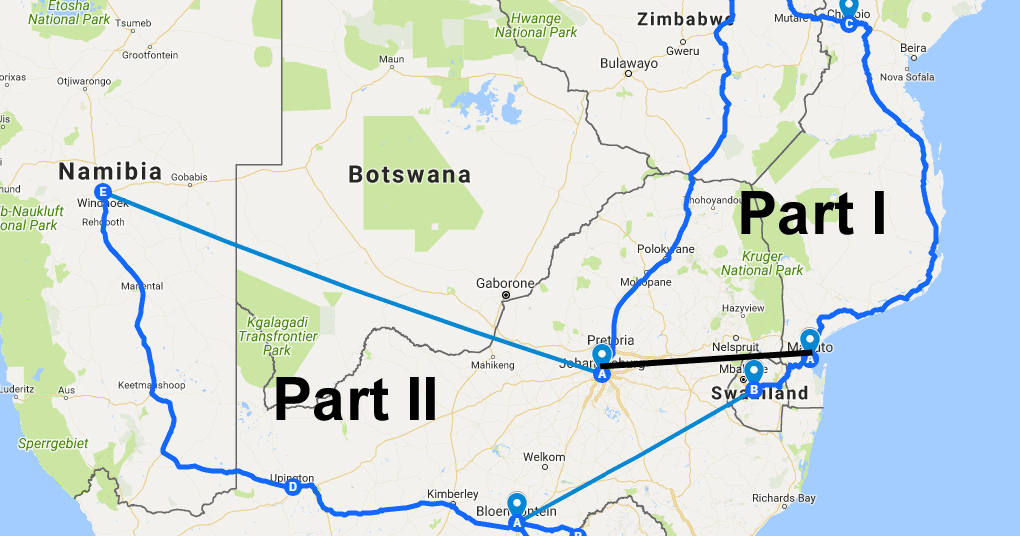
Great Zimbabwe is situated in the southeastern hills of Zimbabwe near Lake Mutirikwi. It is located in a region characterized by a high plateau that extends across southern Africa. The site lies within a natural geographical setting marked by rolling hills, savannah plains, and rocky landscapes, which provided strategic advantages for defense and resource access. The surrounding area features rivers and water sources essential for the settlement’s sustenance and agricultural activities. Its elevated position allowed for visibility over the surrounding landscape, contributing to its historical significance as a powerful political and trading center.
Position on the Zimbabwe Plateau
Great Zimbabwe is situated on the southeastern plateau of Zimbabwe, within the country’s central region. It lies on the Zimbabwe Plateau, a high-altitude area that extends across much of the country’s interior, providing a fertile and elevated landscape. The site is located approximately 20 kilometers east of the modern city of Masvingo, which is often associated with the ancient city. Its strategic position on the plateau offered natural defensibility and access to trade routes, contributing to its historical significance as a powerful center of the Kingdom of Zimbabwe during the medieval period.
Natural Resources and Landscape
Great Zimbabwe is located in the southeastern part of Zimbabwe, nestled within the historical region of Mashonaland. The site is situated on a high plateau that rises approximately 1,200 meters above sea level, offering strategic advantages for defense and visibility. Its geographical position provided access to important trade routes linking the interior of Africa with coastal ports, facilitating commerce and cultural exchanges during its peak period.
The landscape surrounding Great Zimbabwe is characterized by rolling hills, granite outcrops, and lush savannah grasslands. The region’s natural terrain played a significant role in shaping the construction and layout of the ancient city, with many of its stones sourced locally from nearby granite formations. The fertile soils and abundant water sources supported local agriculture, which was vital for sustaining the inhabitants of the city.
- Rich deposits of granite used for building structures
- Nearby rivers and water sources that provided irrigation and sustenance
- Sahelian climate with distinct wet and dry seasons influencing agriculture and settlement patterns
- Extensive grasslands that supported pastoral activities and livestock grazing
Overall, the natural resources and diverse landscape of Great Zimbabwe contributed heavily to its development as a prominent center of trade, politics, and culture in southern Africa, and its strategic geographical position remains a key aspect of its significance today.
Historical Context and Significance
Great Zimbabwe is a legendary ancient city that holds significant historical and cultural importance in Africa. Its location on the map highlights its role as a powerful center of trade, politics, and society between the 11th and 15th centuries. Understanding its geographical context helps to appreciate the ingenuity of its builders and the influence it had on regional development.
Origins and Development
Great Zimbabwe is a historically significant ancient city that serves as a symbol of the rich cultural and architectural achievements of the Shona civilization in southern Africa. Its roots trace back to the late Iron Age, around the 11th century, when it developed as an important political and economic center. The site reached its peak between the 13th and 15th centuries, becoming a major hub for trade, especially in gold and ivory, which contributed to its prosperity and influence. The city’s impressive stone structures, including the iconic Great Enclosure, showcase advanced construction techniques and social organization of the time.
Originating from indigenous communities, Great Zimbabwe’s development was influenced by trade interactions with coastal civilizations, including Arab and Swahili traders, fostering a melting pot of cultural exchanges. Its strategic location on trading routes facilitated the accumulation of wealth and power, allowing the construction of complex stone architecture without mortar. Over centuries, the site declined due to internal strife, environmental changes, and shifting trade routes, but its legacy endures as a testament to indigenous African ingenuity. Today, Great Zimbabwe’s ruins are recognized as a UNESCO World Heritage Site and symbolize African heritage and historical significance.
Role in Regional Trade Networks
Great Zimbabwe played a central role in the historical development of southern Africa, serving as the political and economic hub of a powerful kingdom from the 11th to the 15th centuries. Its strategic location facilitated control over regional trade routes, enabling the exchange of gold, ivory, and other valuable resources with distant markets across Africa and beyond.
The site’s significance extended beyond its impressive architecture and archaeological value, reflecting the complex social and economic systems that supported regional trade networks. These networks connected Great Zimbabwe to Swahili coast ports, facilitating trade with Arab and Asian merchants, which contributed to the prosperity and cultural exchanges of the region.
As a major center in regional trade networks, Great Zimbabwe contributed to the development of wealth, political influence, and cultural identity in southern Africa. Its decline marked shifting trade routes and the emergence of other centers, but its legacy remains integral to understanding regional history and the broader dynamics of trade and civilization in Africa.
Historical Importance in Southern Africa
Great Zimbabwe holds a significant place in Southern African history as the remains of an ancient city that was once the center of a powerful and wealthy kingdom during the late Iron Age. Built between the 11th and 15th centuries, it served as a political, economic, and spiritual hub for the Shona people, showcasing advanced stone-working skills and sophisticated architectural techniques. Its strategic location facilitated trade routes connecting the interior of Africa with coastal traders, contributing to its prosperity and influence.
As a symbol of indigenous African achievement, Great Zimbabwe challenged colonial narratives that often dismissed African civilizations as primitive. The site is recognized globally for its remarkable dry stone construction and complex urban planning, reflecting a highly organized society with elaborate social hierarchies. Its historical importance extends beyond its archaeological value, representing cultural identity, resilience, and the rich heritage of Southern Africa.
Map Features of Great Zimbabwe
The map features of Great Zimbabwe highlight the impressive architectural and archaeological significance of this ancient city. As a remarkable example of early urban development in southern Africa, Great Zimbabwe’s layout showcases sophisticated construction techniques and strategic planning. The map details include key structures such as the Great Enclosure, the Hill complex, and surrounding walls, providing insight into the cultural and historical importance of the site. Understanding these features helps to appreciate the grandeur and complexity of Great Zimbabwe’s ancient civilization.
Main Architectural Structures
Great Zimbabwe is renowned for its remarkable architectural features and the sophisticated map of its ancient site. The complex is characterized by a series of impressive stone structures that highlight the ingenuity of its builders. These features include massive stone walls, conical towers, and enclosures that demonstrate advanced dry stone construction techniques without mortar.
The main architectural structures of Great Zimbabwe consist of the Great Enclosure, the Valley Ruins, and the Hill Complex. The Great Enclosure is the largest and most notable, featuring towering elliptical walls that enclose a vast area and contain a massive conical tower. The Valley Ruins showcase a labyrinth of smaller buildings, courtyards, and pathways that reflect the layout and urban planning of the ancient city. The Hill Complex, situated on a hilltop, served as a royal residence and ceremonial area, providing strategic views over the surrounding landscape.
The map of Great Zimbabwe highlights the spatial arrangement of these structures, illustrating how they functioned within the city and their significance in the societal hierarchy. The extensive stone architecture and layout reveal the city’s role as a major political, economic, and religious center in southeastern Africa during its peak.
Locations of Ruins and Walls
The map features of Great Zimbabwe highlight the site’s impressive architecture and strategic placement within the region. The ruins are characterized by large stone walls, enclosures, and terraces that demonstrate advanced construction techniques. These features reflect the prominence of the civilization that built them and their ability to adapt to the landscape.
Great Zimbabwe is located in the southeastern hills of Zimbabwe, near the town of Masvingo. The main ruins are situated on a granite ridge, which provides a natural defensive advantage and a commanding view of the surrounding area.
The primary walls and enclosures are organized in a complex layout, with significant structures including the Hill Complex and the Great Enclosure. The Great Enclosure is renowned for its massive circular walls, which are among the largest in ancient stone architecture.
- The Hill Complex, located on the highest point, served as the royal residence and ceremonial center.
- The Great Enclosure, with its elliptical shape and enclosing walls, served as a fortress and residence for elite members.
- The Valley Ruins, extending south of the main enclosures, contain smaller structures and evidence of traditional activities.
- Stone walls in the site stretch over several kilometers, encompassing neighborhoods and open spaces vital to the ancient city.
Mapping the Enclosure and Surrounding Areas
The Map Features of Great Zimbabwe reveal a complex and strategically organized site, highlighting its significance as a major cultural and political center. Mapping the enclosure and surrounding areas helps to understand the scale, layout, and functionality of the site, providing insights into the society that built it.
Key features observed on maps of Great Zimbabwe include the main enclosure, valley terraces, and surrounding walls, which collectively demonstrate advanced planning and construction techniques. The main enclosure, often referred to as the Royal Citadel, is characterized by massive stone walls that enclose residential and administrative areas. Outside the main enclosure, the valley terraces and other subsidiary structures indicate specialized zones for various activities such as dwellings, markets, or ritual sites.
- Central Enclosure: The core of the site, featuring massive stone walls that enclose the royal or administrative complex.
- Wall Structures: Extensive stone walls that define different zones and serve as fortifications.
- Terraced Areas: Stepped terraces descending from the main site, possibly used for agriculture or ceremonial purposes.
- Outer Enclosures: Secondary walls surrounding smaller compounds or settlements outside the main enclosure.
- Ritual and Burial Sites: Sacred areas and tombs mapped around the site highlighting religious practices.
- Surrounding Landscape: Natural features such as water sources and hills, strategic for defense and resource management.
Mapping Great Zimbabwe’s features provides a comprehensive understanding of its urban layout and the social hierarchy that it supported. Such maps reveal the ingenuity of its builders, the scale of construction, and the spatial organization that contributed to its prominence in ancient southern Africa.
Archaeological Discoveries Related to Map
Great Zimbabwe, an ancient city built by early African civilizations, holds significant archaeological importance due to its complex stone structures and historical relevance. Recent discoveries related to maps and site layouts have provided deeper insights into the city’s extensive development and urban planning. These archaeological findings help unveil the secrets of how Great Zimbabwe was constructed and organized, shedding light on the region’s rich cultural and technological history.
Findings of Ruins and Artifacts
Great Zimbabwe, an ancient city and archaeological site in southeastern Zimbabwe, has garnered significant attention due to its impressive ruins and historical significance. Discoveries related to its map and spatial layout provide valuable insights into the sophisticated urban planning and architectural skills of its inhabitants. Excavations have unearthed a variety of artifacts, including intricate pottery, stone tools, and ornamental objects that reveal the cultural and economic life of the civilization. The ruins, characterized by massive stone walls and conical towers, highlight advanced masonry techniques without mortar, emphasizing the ingenuity of the builders. Mapping efforts and archaeological findings continue to deepen understanding of Great Zimbabwe’s role as a major trading hub and political center in southeastern Africa, shedding light on its influence and connections with other ancient societies.
Mapping of Platform Mounds and Valleys
Great Zimbabwe is a pivotal archaeological site that has significantly contributed to our understanding of ancient African civilizations, especially in the context of mapping and landscape analysis. The complex of stone ruins, including impressive platform mounds and valley structures, has been meticulously studied to uncover the spatial organization and settlement patterns of its inhabitants. Archaeologists have utilized various mapping techniques, from traditional field surveys to modern GIS technologies, to document the layout of the site, revealing how the platform mounds served as religious, political, or residential centers, and how the valleys facilitated access and resource distribution.
Recent discoveries have focused on the arrangement of these mounds in relation to the surrounding valleys, shedding light on the strategic placement for defense, trade, and social organization. Excavations have uncovered artifacts, postholes, and construction techniques that indicate a sophisticated understanding of territory management by the builders. Mapping efforts have also helped identify previously unknown structures and pathways, offering a comprehensive view of the city’s urban planning and its integration with the landscape.
The integration of archaeological data with topographical mapping has provided insights into how Great Zimbabwe’s inhabitants adapted their environment for sustainability and prosperity. These discoveries continue to deepen our appreciation of its historical significance and demonstrate the importance of precise mapping in reconstructing ancient societies. The ongoing study of site layout and landscape features contributes to the broader understanding of regional trade networks and political hierarchy within the ancient African context.
Reconstruction of Ancient Layout
Great Zimbabwe is an ancient city renowned for its impressive stone architecture and historic significance. Archaeological discoveries related to its map and layout have provided valuable insights into the urban planning and societal organization of the civilization that built it. Through meticulous excavation and mapping techniques, researchers have reconstructed the original layout of Great Zimbabwe, revealing a complex network of enclosures, dwellings, and sacred sites arranged in a strategic manner. These reconstructions showcase the advanced understanding of spatial planning by the ancient inhabitants and allow us to visualize how the city expanded over time. The detailed mapping efforts have also helped identify the different zones within the site, including the royal palace, the enclosure for the ruling class, and areas for trade and everyday activities. Such archaeological findings have significantly deepened our understanding of Great Zimbabwe’s historical and cultural context, illustrating its importance as a major center of power and commerce in southeastern Africa.
Tourist and Cultural Significance
Great Zimbabwe stands as a testament to the rich cultural heritage and historical significance of Southern Africa. As an iconic archaeological site, it offers a profound glimpse into the ancient civilization that once thrived there, attracting travelers and historians alike. Its impressive stone architecture and historical importance make it a key destination for those interested in exploring the cultural depths of Zimbabwe and understanding the legacy of its ancestors.
Mapping Tourist Routes and Access Points
Great Zimbabwe holds immense tourist and cultural significance as a UNESCO World Heritage Site, drawing visitors from around the world to explore its historical and archaeological marvels. Its ancient stone structures, including the iconic Great Enclosure and Tower, offer a glimpse into the sophisticated civilization that once thrived in Southern Africa. By mapping tourist routes and access points, visitors can be guided efficiently through the site, ensuring an enriching experience while preserving its integrity. Clear pathways from designated entry points to major landmarks facilitate smooth navigation, allowing tourists to appreciate the site’s grandeur and cultural importance. Organized routes also help in managing visitor flow, enhancing safety, and promoting sustainable tourism practices at this vital heritage location.
Cultural Heritage Sites on the Map
Great Zimbabwe holds a profound tourist and cultural significance, serving as a symbol of historical grandeur and ancestral heritage in Africa. It attracts visitors from around the world who are eager to explore its impressive stone ruins and learn about the ancient civilization that built them. The site is a UNESCO World Heritage Site, recognized for its cultural importance and well-preserved architecture.
The map of Great Zimbabwe highlights numerous archaeological monuments and cultural heritage sites that offer insight into the historic city. Notable locations include the Great Enclosure, the Conical Tower, and the Valley Ruins, each representing different aspects of the civilization’s advanced construction techniques and social organization. These sites are essential for understanding the region’s history and the cultural identity of the people associated with Great Zimbabwe.
Educational and Conservation Maps
Great Zimbabwe holds a profound tourist and cultural significance as the historical heart of Zimbabwe’s ancient civilization. Visitors are drawn to its impressive stone ruins, which represent the ingenuity and artistry of the early Shona people. The site offers a glimpse into the rich heritage and traditions that have shaped the nation’s identity, making it a vital cultural landmark. Educationally, maps of Great Zimbabwe serve as essential tools to understand the layout of the complex, its strategic location, and its archaeological features, enhancing learning for students, researchers, and visitors alike. Conservation maps are crucial for preserving this UNESCO World Heritage Site by highlighting areas requiring protection and guiding restoration efforts, ensuring that future generations can continue to appreciate its historical and cultural value.




0 Comments