

Location and Geographical Features of Ghana
Ghana is a West African country located along the Gulf of Guinea, renowned for its diverse geographical features. It shares borders with countries like Ivory Coast, Burkina Faso, Togo, and Benin. The country’s landscape includes coastal plains, vast savannahs, and lush rainforests, along with notable features such as the Great and Volta Rivers. These geographical characteristics play a vital role in shaping Ghana’s climate, agriculture, and cultural diversity, making it a unique and significant part of Africa on the world map.
Position within West Africa
Ghana is located in West Africa, bordered by Côte d’Ivoire to the west, Burkina Faso to the north, Togo to the east, and the Gulf of Guinea to the south. It covers an area of about 238,535 square kilometers, featuring diverse geographical features such as coastal savannahs, rainforests, and inland lakes. The country’s position within West Africa places it as a strategic hub for trade and regional integration. Notable landmarks include the Volta River and Lake Volta, one of the largest artificial reservoirs in the world, which significantly influences the country’s geography and economy. Ghana’s varied terrain and central location make it a key country in the regional map of West Africa, contributing to its rich cultural and natural landscape.
Borders and Adjacent Countries
Ghana is a country located in West Africa, characterized by diverse geographical features and situated within specific regional borders. It has a strategic position on the Atlantic Ocean coastline, which influences its climate and trade routes.
- Ghana is bordered to the north by Burkina Faso.
- To the east, it shares a border with Togo.
- On the west, it is bordered by Ivory Coast (Costa do Marfim).
- To the south, Ghana has a coastline along the Atlantic Ocean.
The country’s geographical features include coastal savannahs, tropical rainforests in the south, and dry open plains in the north. The Volta River, which feeds Lake Volta—one of the largest man-made reservoirs in the world—runs through the country, contributing to its fertile lands and hydroelectric power generation.
Topography and Landscape
Ghana is located in West Africa and is bordered by the Atlantic Ocean to the south, Côte d’Ivoire to the west, Burkina Faso to the north, and Togo to the east. Its geographical position places it within the tropical region, characterized by diverse landscapes. The country features a combination of coastal plains, lush rainforests, and rolling savannahs that extend inland. Ghana’s topography includes several prominent landforms such as the Volta River, Lake Volta, which is one of the largest artificial reservoirs in the world, and the Akwapim-Togo mountain range that runs along the eastern border. The landscape varies from the fertile coastal strip to the forested interior and the drier northern savannahs, providing a rich and diverse environment that supports a wide range of flora and fauna. Overall, Ghana’s geographical features play a crucial role in its climate, agriculture, and cultural diversity, making it an important country on the world map.”
Ghana on the World Map
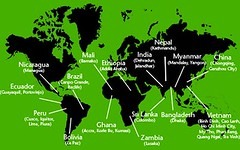
Ghana is a vibrant West African country prominently positioned on the world map. Known for its rich history, diverse culture, and strategic location, Ghana lies along the Gulf of Guinea and shares borders with Côte d’Ivoire, Burkina Faso, Togo, and the Atlantic Ocean. Its geographical position makes it an important nation both regionally and globally, offering valuable insights into West African geography and international relations.
Global Coordinates and Latitude-Longitude
Ghana is a country located in West Africa, prominently marked on the world map with its strategic position along the Gulf of Guinea. Its geographical location is approximately between latitudes 4° and 12° North, and longitudes Ghana in world map plays a vital role in connecting West Africa with the rest of the world through trade and cultural exchanges. The global coordinates of Ghana help in identifying its precise position on the globe, facilitating navigation and geographical understanding. The latitude and longitude of Ghana range roughly from 4° to 12° North and 1° West to 3° East, respectively, highlighting its placement in the northern and western hemispheres. This positioning influences Ghana’s climate, agriculture, and maritime activities, making it an important country on the world map. Understanding Ghana’s location through its coordinates provides insight into its regional significance and global connectivity.
Relative Location in Africa and the World
Ghana is a west African country located along the Gulf of Guinea. It is positioned on the world map in the southeastern part of the African continent. Ghana lies just north of the equator, bordered by Ivory Coast to the west, Burkina Faso to the north, Togo to the east, and the Atlantic Ocean to the south. Its strategic location makes it an important gateway between West Africa and the wider world. On the world map, Ghana is situated roughly in the central part of the African continent, making it accessible for international trade and travel. The country’s placement in West Africa also highlights its cultural and economic connections within the region and globally.
Map Representations and Geographic Coordinates
Ghana is a country located in West Africa, prominently marked on the world map due to its geographic significance and cultural influence. Its position is generally situated along the Gulf of Guinea, bordered by Côte d’Ivoire, Burkina Faso, Togo, and the Atlantic Ocean. Map representations of Ghana can vary from political maps highlighting borders and cities to physical maps showing terrain and natural features. Accurate geographic coordinates are essential for locating Ghana precisely on global maps.
- Ghana’s approximate geographic coordinates are 7.9465° North latitude and 1.0232° West longitude.
- On world maps, Ghana is typically positioned in the central-western region of Africa.
- The country’s location is important for trade, navigation, and understanding regional geography.
- Map representations often include capital city Accra, major cities, and national boundaries.
Significance of Ghana’s Location
Ghana’s strategic location on the west coast of Africa has greatly contributed to its historical and economic significance. Situated along the Gulf of Guinea, it serves as a key gateway for trade and maritime activities in the region. Its position also places it at the crossroads of West African cultures, making it a vital hub for regional connections. Understanding Ghana’s location helps to appreciate its role in global trade, politics, and cultural exchange.
Trade Routes and Access to the Coast
Ghana’s location is highly significant in the context of world trade and geopolitics due to its strategic position along the Gulf of Guinea. Its access to the coast allows for direct maritime trade routes, making it a vital hub for the export of commodities such as gold, cocoa, and minerals. Historically, Ghana’s location facilitated participation in ancient trade networks, connecting West Africa to North Africa and beyond. This advantageous position has contributed to Ghana’s economic development and regional influence, as it serves as a gateway for international trade and commerce in West Africa.
Strategic Importance in West Africa
Ghana’s location in West Africa holds significant strategic importance due to its position along the Gulf of Guinea, providing access to major Atlantic shipping routes. Its central positioning within West Africa makes it a key player in regional trade, security, and diplomacy. Ghana acts as a bridge between other West African nations, fostering economic integration and cooperation. Additionally, its proximity to important neighbors like Ivory Coast, Togo, and Burkina Faso enhances its influence in regional politics and stability. This strategic location supports Ghana’s role as a vital hub for commerce, transit, and international relations in West Africa.
Cultural and Historical Context of Location
Ghana’s location on the west coast of Africa offers it a strategic position that has historically facilitated trade and interaction with other regions. Its proximity to the Atlantic Ocean provides access for maritime trade routes, enhancing its importance in regional and international commerce. Culturally, Ghana is home to diverse ethnic groups and rich traditions, which have been influenced by various historical events such as trade, colonization, and independence movements. The historical context of its location reflects a legacy of complex interactions that have shaped its national identity. This geographical and cultural backdrop makes Ghana a significant country in the world map, highlighting its vital role in African history, culture, and global partnerships.
Mapping Ghana: Cartographic Details
Mapping Ghana provides an insightful exploration of its geographical and cartographic features within the global context. This detailed examination highlights Ghana’s location, boundaries, and significant landmarks, offering a clear understanding of its place on the world map. Through precise mapping details, the article showcases Ghana’s diverse landscapes and emphasizes its importance in regional and international perspectives.
Major Cities and Infrastructure on the Map
Ghana is a West African nation prominently featured on world maps with detailed cartographic representations. The map highlights its geographical location along the Gulf of Guinea, bordered by Côte d’Ivoire, Burkina Faso, Togo, and the Atlantic Ocean.
Major cities such as Accra, Kumasi, Takoradi, and Tamale are clearly marked, serving as key economic, political, and cultural centers. Accra, the capital, is situated along the southern coast and stands out as the primary hub for government and international activities.
Infrastructure details include major roads, rail networks, and ports that facilitate transportation and trade across the country. The shoreline along the Atlantic Ocean features key ports like the Tema and Takoradi ports, essential for maritime commerce.
The map also depicts significant natural features such as Lake Volta, one of the largest artificial reservoirs in the world, and the distribution of national parks and protected areas. Overall, the cartographic details provide a comprehensive view of Ghana’s geographical and infrastructural landscape on the world map.
Natural Landmarks and Protected Areas
Ghana is a country located along the Gulf of Guinea in West Africa, characterized by diverse cartographic features, natural landmarks, and protected areas that are significant on the world map. Its geographic boundaries are well-defined, showcasing both coastal regions and inland terrains, which are crucial for understanding its spatial layout and environmental zones.
- Mapping Ghana reveals a varied topography that includes low-lying coastal plains, the Volta River basin, and the mountainous regions of the Akwapim-Togo range.
- Natural landmarks such as Lake Volta, one of the largest artificial reservoirs in the world, and the Cape Coast Castle are prominent features marked on maps of Ghana.
- The country’s protected areas encompass national parks like Kakum National Park, Mole National Park, and Bia National Park, which are essential for conservation efforts and biodiversity hotspots.
- Major cities such as Accra, Kumasi, and Takoradi are highlighted as key urban centers and transportation hubs on the world map.
- Ghana’s coastline extends approximately 560 kilometers, marked with important ports and beaches that are vital for trade and tourism.
- The cartographic details also include boundaries with neighboring countries—Ivory Coast, Burkina Faso, Togo, and the Gulf of Guinea—integral for geopolitical mapping.
Transportation Networks and Key Connections
Ghana’s position on the world map is marked by its strategic location in West Africa, bordered by Côte d’Ivoire, Burkina Faso, Togo, and the Gulf of Guinea. Its cartographic details highlight diverse terrain including coastal plains, forested areas, and savannahs. The country’s transportation networks are well-developed, comprising major roads, railways, and ports that facilitate internal movement and international trade. Key connections include the Accra-Kumasi highway, the railway lines linking coastal cities to inland regions, and the Takoradi port serving as a vital gateway for imports and exports. These transportation routes support economic activities and connect Ghana to neighboring countries, making it a crucial hub in the regional and global landscape.
Ghana in Global Context
Ghana, a vibrant West African nation, holds a significant position in the global landscape due to its rich cultural heritage, diverse economy, and strategic geographical location. As a stable democratic country, Ghana has become an influential player in regional and international affairs. Its growing economy, natural resources, and active participation in global organizations highlight its rising importance on the world map, making it a key country to watch in Africa’s development trajectory.
Participation in International Organizations
Ghana plays a significant role in the global arena through its active participation in various international organizations and initiatives. As a respected member of the international community, Ghana contributes to global discussions on economic development, peacekeeping, and sustainable growth. Its strategic geographical location in West Africa enhances its influence in regional and global affairs.
- United Nations: Ghana is an important member, contributing to peacekeeping missions and supporting global development goals.
- African Union: Ghana is influential in fostering regional integration, peace, and security across Africa.
- ECOWAS: As a founding member, Ghana actively promotes economic cooperation and political stability within West Africa.
- World Trade Organization: Ghana advocates for fair trade policies and participates in global economic discussions to boost its development.
Ghana’s participation in these organizations highlights its commitment to fostering international cooperation, supporting global peace, and promoting sustainable development. Its strategic position on the world map underscores its importance in connecting Africa with the rest of the world.
Geopolitical Significance
Ghana holds a significant place in the global context due to its strategic geographical location in West Africa. Positioned along the Gulf of Guinea, it serves as a vital gateway for trade and maritime activities in the region. Ghana’s stability, economic growth, and vibrant democratic institutions contribute to its recognition as an influential player in both regional and international affairs. Its rich natural resources, including gold, cocoa, and minerals, further enhance its importance in the global market. Geopolitically, Ghana acts as a bridge between West Africa and the rest of the world, fostering regional cooperation and contributing to international security initiatives.
Economic Zones and Resource Distribution
Ghana occupies a significant position on the world map due to its strategic location in West Africa, serving as a gateway for international trade and diplomacy in the region. As a country rich in natural resources, Ghana is renowned for its gold, cocoa, and recently discovered oil reserves, which play a vital role in its economy and global markets. The nation’s participation in various economic zones, such as the Tema Free Zone and the Greater Accra Region, fosters industrial growth and encourages foreign investment. Resource distribution within Ghana is uneven, with mineral-rich areas like the Ashanti and Western Regions contributing substantially to national revenue, while rural areas often face developmental challenges. These factors collectively shape Ghana’s role in the global economy, making it a key player in regional stability and economic development in West Africa.


0 Comments